
Short answer
A handheld device like WoofAway is for the moments you're there for — the doorbell, a visitor, a walk. A collar like NooBark works whether you're in the room or not. Most households end up wanting one of each rather than picking a winner.
Heads-up: product links below are affiliate links. If you buy through one, Vitherma may earn a small commission at no extra cost to you — and I only link to gear I'd point a friend to.
This is the newest category on the site — after home comfort and kitchen gadgets, pets is next. It started with a simple question a lot of dog owners ask: do you need a training tool that's always on your dog, or one you pick up and aim in the moment? The honest answer is that these solve two different problems, so this piece covers both instead of forcing a single winner.
WoofAway — a handheld interrupt for the moment it happens

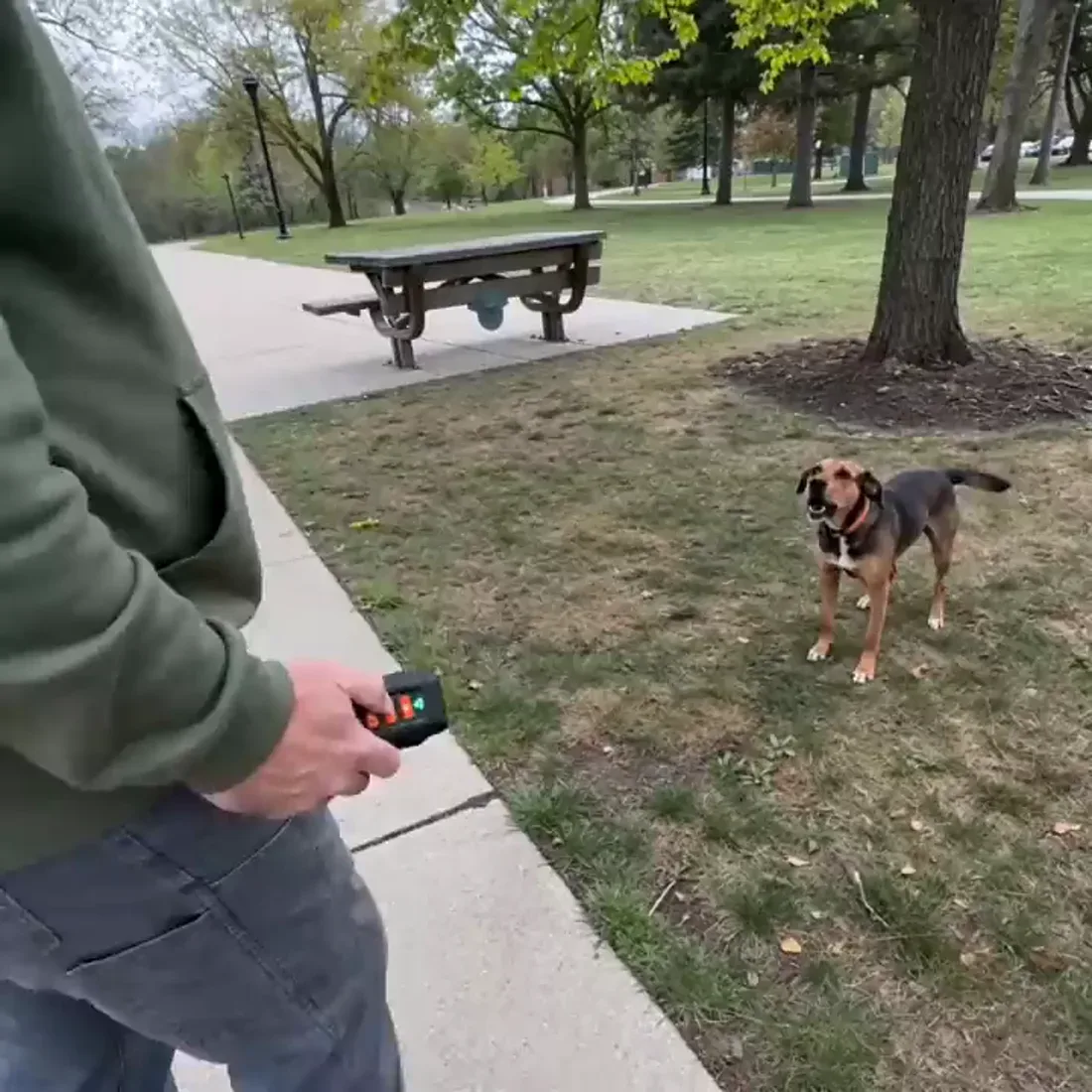
WoofAway is a handheld device you point toward your dog and press to emit an ultrasonic tone — not audible to people, but attention-getting to most dogs. The idea isn't to punish; it's to break the loop of an unwanted behavior (barking at the door, jumping on a guest, pulling on a walk) for a couple of seconds so you can give a clear command and reward the right response. The maker is upfront that it's a support tool, not a replacement for training: "WoofAway supports reward-based training. It doesn't replace practice, supervision, a qualified trainer, or advice from your veterinarian."
Real specs from the product page: three ultrasonic modes (25 kHz, 10–25 kHz, and 10–30 kHz), a working distance of roughly 1 to 10 meters (3 to 33 feet), USB-C charging (about 4 to 6 hours for a full charge), a 10-second automatic cutoff per press, and a green LED that confirms it's firing (since the sound itself is inaudible to people). It's built for dogs with normal hearing, roughly 6 months to 8 years old, under 50 lb — and the maker states directly that it won't work for a hearing-impaired dog.
Real owner quotes from the product page: Denise R. in Chattanooga says "after twelve days, Milo gave one bark and turned to me for his quiet cue," and Marcus T. in Boise reports it "got his attention in three days," with "the steady sit" taking another week of practice. Karen M. gave it four stars specifically because her older, hearing-impaired terrier doesn't respond to it — "just as the page warned" — which lines up with the maker's own disclosure rather than contradicting it. Read the full WoofAway review for the complete breakdown.
NooBark — a collar that works even when you're not in the room
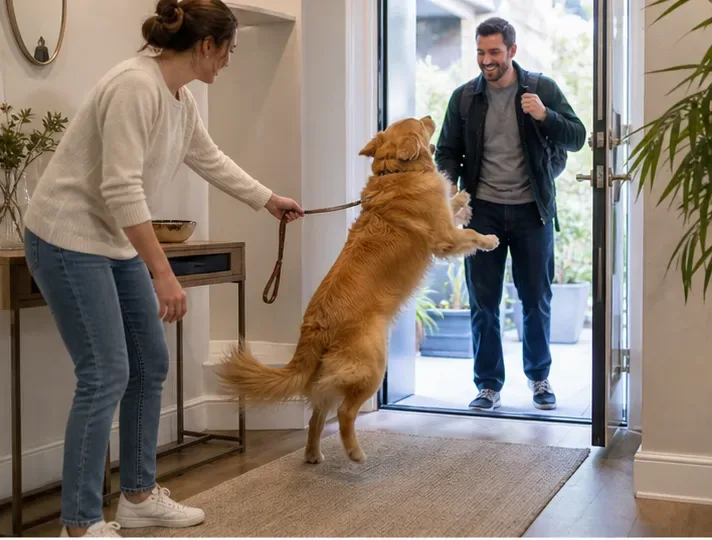
NooBark is a wearable anti-bark collar — the opposite trade-off from a handheld device. It's on your dog rather than in your hand, so it responds to barking whether you're watching or not: the empty-house bark at the mail carrier, the 6 a.m. bark at a neighbor's dog, the barking you only hear about from a neighbor. That's the gap a handheld trainer can't cover, since it only works when you're there to use it.
I already wrote the full breakdown of NooBark on its own site, with the real specs, setup and testing notes. See the NooBark page for the complete details and current price.
The real difference, side by side
| WoofAway (handheld) | NooBark (collar) | |
|---|---|---|
| Works when you're not home | No — you have to aim and press it | Yes — worn continuously |
| Needs your active attention | Yes, by design — that's the training moment | No — responds on its own |
| Good for walks and visitors | Yes — fits in one hand | Works, but it's already on the dog either way |
| Works for hearing-impaired dogs | No, per the maker | Depends on the model's detection method |
| Charging | USB-C, about 4–6 hours | See the NooBark page for details |
If you only deal with barking or jumping when you're already in the room, a handheld device is the cheaper, simpler answer. If the barking happens while you're out, asleep, or in another part of the house, a collar is doing a job a handheld tool structurally can't.
Frequently asked questions
Is a handheld ultrasonic trainer or a collar better for barking?
A handheld device like WoofAway needs you present and aiming it, so it works best for behaviors you can see coming — the doorbell, a visitor, a walk. A collar works whether you're in the room or not, which matters more for barking that happens while you're away or in another part of the house.
Do ultrasonic trainers hurt dogs?
WoofAway's own materials describe it as non-contact with no shock or spray, meant to get attention rather than cause pain — and they're upfront that it won't work for hearing-impaired dogs since it relies on sound. As with any training tool, watch for signs of fear or distress and stop if you see them.
Can I use both a handheld trainer and a collar?
Yes — they solve different moments. A collar can handle unsupervised barking at home, while a handheld device gives you a tool for walks, visitors, and training sessions where you're actively working with your dog.
Will either of these replace a dog trainer?
No. Both are described by their own makers as support tools for interrupting a behavior long enough to redirect and reward it — not a substitute for practice, supervision, or a qualified trainer for serious aggression or fear-based issues.