
Short answer
Match the heater or cooler to the room, not the price tag. Small, well-insulated rooms want a 1500 W ceramic or a quiet oil-filled unit; open living spaces want infrared or a true portable AC with a vent hose. Evaporative coolers only earn their cost in dry climates.
Heads-up: some product links below are affiliate links. If you buy through one, Vitherma may earn a small commission at no cost to you — and I only link to gear I'd point a friend to.
Every winter my husband asks the same question. "Are we buying a heater this year, or are we just going to sit here in blankets again?" Every summer it's the reverse: the ceiling fan is not enough, but do we really need another appliance taking up floor space?
After a decade of testing heaters and coolers in our own house — the drafty century-old dining room, the too-warm south-facing bedroom, the bathroom that is somehow always five degrees off — I've settled on a way of choosing that works. It's not a "best of" list. It's a decision tree. Match the space, the season, and the person who has to sit next to the machine, and you almost always land on the right one.
This guide walks through the whole framework. Below it, I'll link to the deep-dives on each specific decision.
How do I match a heater to my room size?
The rule I've never seen fail: about 10 watts per square foot of well-insulated indoor space. That number goes up if the room has cathedral ceilings, is over a garage, has old single-pane windows, or shares a wall with the outdoors. It goes down if you're only warming a corner and the rest of the house is already heated.
- Small bedroom or home office (up to 150 sq ft): A single 1500 W ceramic or a small oil-filled radiator is enough. You'll often run it on the 750 W low setting.
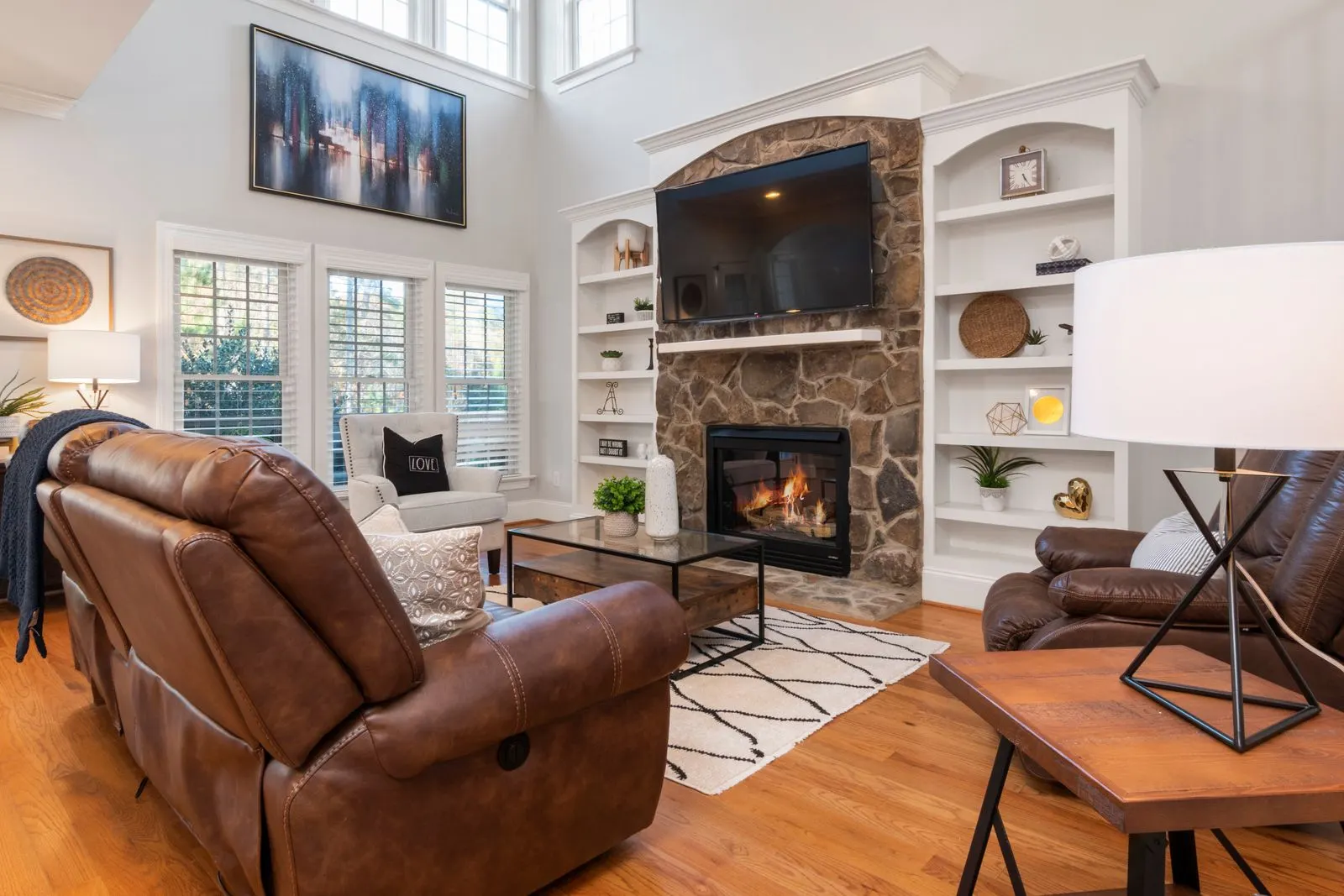
- Medium living room (200–300 sq ft): A 1500 W ceramic works, but only if the room is closed off. If it opens to a hall or kitchen, look at infrared instead — it warms people and objects directly, so cold air moving through doesn't erase your progress.
- Large open space (over 400 sq ft): One portable heater will not do this. Two smaller ones, one at each end, will beat a single loud "high-powered" tower every time.
Warming a closet, a home office or a bedroom under 200 sq ft? The small-room heater guide has the watts-by-room-size table, the 15-amp circuit math and picks for each space.
Almost every heater sold in the U.S. and Europe tops out at 1500 W. It's not a marketing choice; it's an electrical one. A standard 15-amp household circuit at 120 V handles about 1800 W total, and you don't want a single appliance eating all of it. If a listing promises "3000 W" from a plug-in unit, walk away.
Ceramic, infrared, oil-filled — which type do I actually want?
All electric heaters convert 100% of the electricity they draw into heat. So watt for watt, none is "more efficient." What differs is how the heat moves, and that changes how the room feels.
Ceramic (convection + fan)
The most common type. A ceramic plate heats up, a small fan pushes air across it, and warm air fills the room. Fast, cheap, everywhere. Downside: the fan makes noise (usually 45–55 dB on high), and heat leaves the room the moment the ceiling drafts pick up. Best for a closed bedroom or office where you want warmth in five minutes. The Heatoor I reviewed here is a PTC ceramic room heater of this kind.
Oil-filled radiator
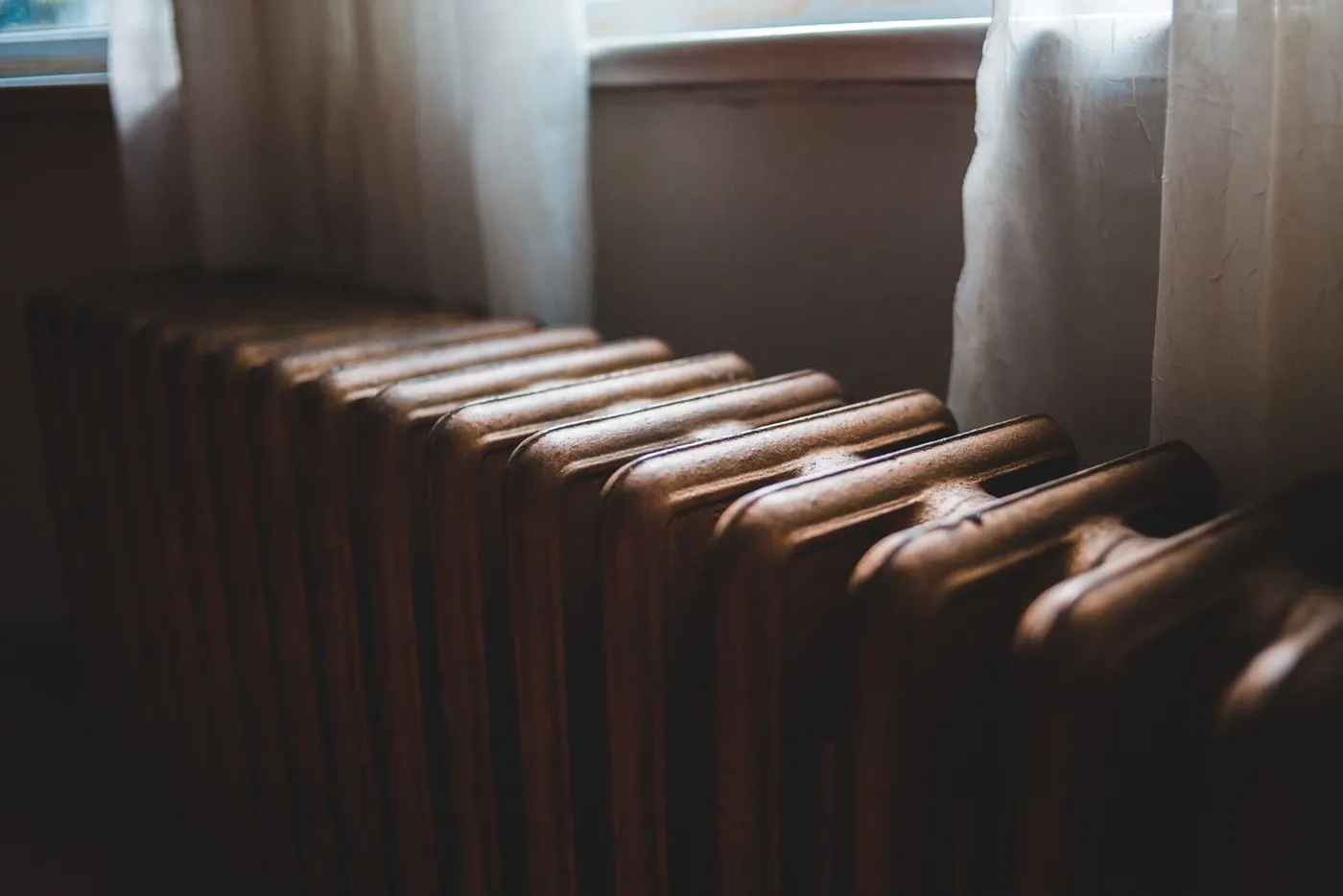
Silent. No fan. The oil inside heats up and radiates warmth for a long time — even after you switch it off. Slower to start (20–30 minutes to feel the difference), but wonderful in a bedroom because there's nothing to hear. Heavier and slower to move between rooms.
Infrared
Doesn't heat the air at all — it heats objects and skin, the way sunlight does. Feels warm within a minute of turning on, even in a drafty room, because the drafts aren't stealing the heat. Best for garages, workshops, patios, and open living rooms. Downside: the moment you step out of the line of sight, you feel the cold again. The ceramic vs infrared comparison goes deeper on when each one wins.
Fan-forced (metal coil)
The cheapest option, often under $30. Same principle as ceramic but with an exposed metal coil. Louder, prone to a burnt-dust smell in the first week, and no meaningful safety benefit over a modern ceramic. I don't recommend them anymore.
How safe are portable heaters, really?
Safer than they used to be, but they're still the appliance most likely to burn a house down. The U.S. National Fire Protection Association found that heating equipment was involved in an estimated 44,210 home fires per year between 2016 and 2020, and portable and stationary space heaters are responsible for the large majority of the deaths — because people leave them on next to furniture, curtains, or bedding.
The four features that make a heater safe enough to use in a bedroom:
- Tip-over shutoff. The heater turns itself off when it's knocked over. Non-negotiable if you have kids or pets.
- Overheat shutoff. A thermal sensor kills the power if the housing gets too hot — for example, because a blanket fell against it.
- Cool-touch housing. The outside stays under a temperature where a hand or leg brushing against it doesn't burn.
- A thermostat, not just "high/medium/low". A thermostat cycles the element on and off around a target temperature. Bare high/low settings just run continuously and cook the room.
Combine those with the placement rules — three feet clear on every side, hard floor only, plugged directly into an outlet, never an extension cord — and a modern portable heater in the bedroom is a reasonable thing to use while you're awake and getting ready for bed. The Consumer Product Safety Commission's advice is to turn it off when you sleep, and the overnight-safety piece has the full 7-rule checklist.
How much does a heater actually add to my electric bill?
Do the math once and you'll never wonder again. Take the wattage, divide by 1000, multiply by the hours you'll run it, multiply by your electricity price per kWh.
A 1500 W heater running 8 hours a day, at the U.S. average of about $0.16 per kWh, costs $1.92 a day — about $58 a month. Run it 24 hours (bad idea in most cases) and you're near $175. Set the thermostat to keep the room at 68°F instead of just running on high all day, and the element cycles off half the time, cutting the real cost roughly in half.
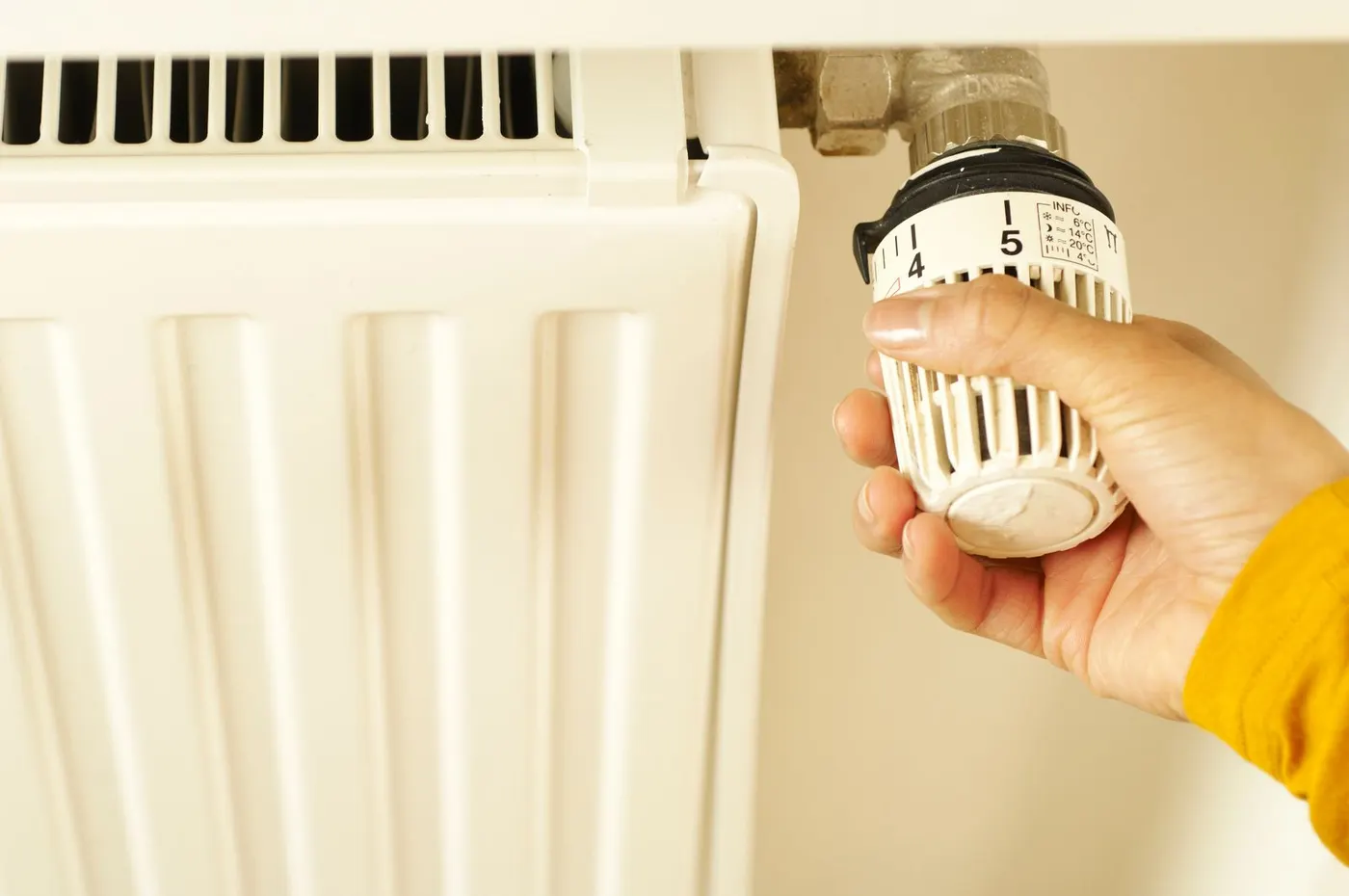
That's why the framework is: heat the person or the small room they're in, not the whole house. A $40 heater running two hours a night is cheaper than turning up the central furnace three degrees for eight. The U.S. Department of Energy's home heating guide (PDF) describes space heaters the same way: supplemental heat for a specific room.
And on the cooling side — what actually works in summer?
Cooling is where most people spend money on the wrong thing. The three portable categories look almost identical in a store, but they behave completely differently.
- Fan. Moves air, doesn't cool it. Effective when the room is under 82°F and you just need the air to keep moving on your skin.
- Evaporative (or "swamp") cooler. Blows air across a wet pad. Real cooling — but only in dry climates (roughly under 50% relative humidity). Useless in Miami, brilliant in Phoenix.
- Portable air conditioner. Actual refrigeration, works anywhere. But it has a vent hose that must go out a window or through a wall — that's how it dumps the heat outside. Anything sold as a "ventless portable AC" is not a real AC.
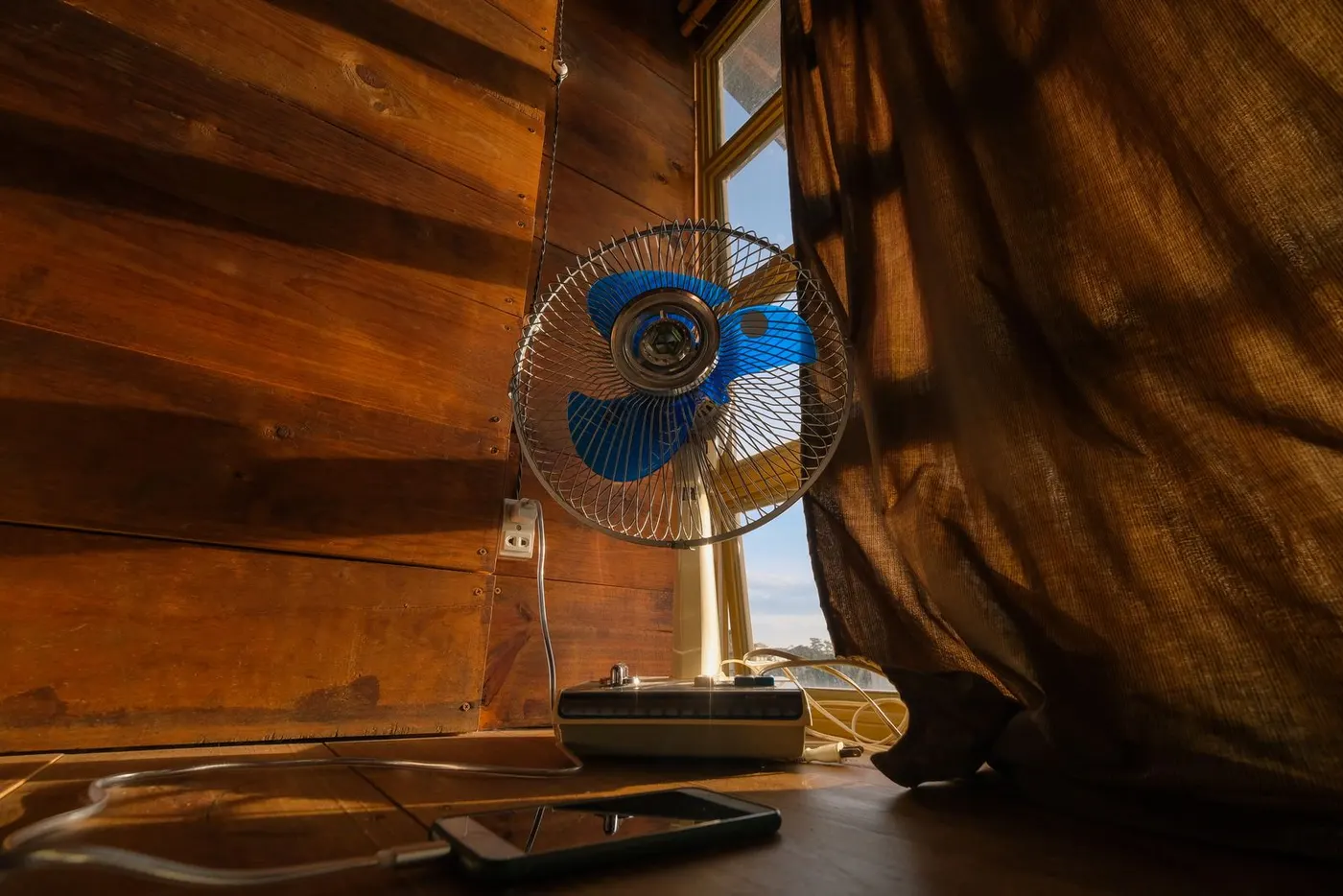
The full comparison, with the humidity rule that decides between them, is in the portable cooler vs portable AC piece. If your summer decision is really "do I need cooling in the same room I heat in winter," that piece and the overnight-safety guide are the two you want together.
What about noise? Which ones can you sleep next to?
The single biggest surprise when I started measuring: the "quiet" claim on the box almost never matches what a phone decibel meter shows a foot from your pillow. Real numbers from my bedroom, measured at night with the room otherwise silent:
- Oil-filled radiator: under 20 dB (silent — just the click of the thermostat cycling).
- Ceramic on low: 40–45 dB (audible, like a soft fan).
- Ceramic on high: 50–55 dB (noticeable, will keep some sleepers up).
- Portable AC on low: 48–55 dB (a real appliance — you hear it).
- Portable AC on high: 58–65 dB (loud enough that most people put it in a different room).
If sleep matters, an oil-filled heater in winter and a bedroom-rated ductless mini-split in summer beats a portable in both seasons. But if you're renting or don't want to commit, a good ceramic and a good portable AC still work — you just accept a background hum.
How do I clean and maintain a portable heater or cooler?
Nobody sells you a heater and hands you the maintenance schedule. Here's the one I actually follow, and it's kept mine running for six full winters.
At the start of the season (or the first week you unbox it new): pull the unit out, vacuum the intake grill with the soft-brush attachment, wipe the outer housing with a barely-damp microfibre cloth, and — this is the one nobody does — read the plug for scorch marks or discoloration. If the plug is brown or black at the prongs, so is the wall outlet. Both need replacing before the heater runs another minute. That single check has caught two bad outlets in my house.
Ceramic and fan-forced units. Dust builds up on the heating element every year. The first ten minutes of running after a summer in storage will smell like burning dust — that's normal, but only if it goes away. If the smell doesn't clear after the first burn-off, vacuum the intake harder and try again. If it still smells the second time, the element is coated in something the vacuum can't reach and the unit is done. Don't disassemble to clean an element yourself; it's not worth it.
Oil-filled radiators. Nothing. Really. Wipe the outside once a year, check that the wheels and knobs still turn, done. There's no filter, no fan, no serviceable part — that's a big reason they last so long. Mine is on winter number six with zero maintenance.
Evaporative coolers. This is the maintenance-heavy category. Empty the water tank between uses (standing water grows mildew in days), rinse the pad once a month during the season, and replace the pad every 12–18 months of use. A neglected pad smells musty within a week and puts that smell into the room every time you run it. If yours already smells, replace the pad — you can't clean it back.
Portable air conditioners. Pull and rinse the washable filter every two weeks of use, drain the condensate tank when the light says so (models with self-evaporation still need a full drain every few weeks), and store the unit with the hose empty at the end of the season. A wet hose left coiled in a hot garage grows mold in the pleats, and next summer that mold sprays into your bedroom the first time you switch on.
A shorter version of the whole framework
If you skimmed everything above, this is what to keep:
- Pick the room first, the machine second.
- 10 W per sq ft for heating; more if drafty.
- Ceramic for fast, oil-filled for quiet, infrared for open or drafty spaces.
- Non-negotiable safety features: tip-over shutoff, overheat shutoff, cool-touch, real thermostat.
- Never on an extension cord. Never within three feet of anything soft.
- For cooling: fan if under 82°F, evaporative if dry climate, portable AC (with vent hose) if humid.
- Measure noise before you buy for a bedroom — the box lies.
The rest of this site is the "deep dive" for each of those points. Start with the two most-asked questions right now: whether it's actually okay to sleep with a space heater on, and the real difference between a portable air cooler and a portable AC.
Frequently asked questions
How many watts of heater do I need per square foot?
About 10 watts per square foot of well-insulated indoor space. A 150 sq ft bedroom is comfortable with a 1500 W heater; a drafty 300 sq ft room usually needs supplemental heat or a larger unit.
Is a ceramic or infrared heater cheaper to run?
Both use roughly the same electricity at the same wattage — all electric heaters are 100% efficient at converting electricity to heat. Infrared often feels warmer faster because it heats objects and people directly, so you can run it on a lower setting and pay less.
Do portable air conditioners work without a window?
True portable ACs need a vent hose to a window or wall to expel hot air. Anything sold as a "ventless portable AC" is usually an evaporative cooler, which only works well in dry climates.
Are space heaters expensive to run?
A 1500 W heater running 8 hours a day at $0.16/kWh costs about $1.92 per day, or roughly $58 a month. Using the thermostat to hold a target temperature (instead of running continuously) cuts that roughly in half.
Do I really need a smart thermostat, or is a manual dial fine?
For a portable heater in one room, a good mechanical thermostat is fine. The key is that it cycles the element off when the room is warm — not that it talks to your phone. A smart plug or Wi-Fi thermostat adds convenience (turning on before you get home), not safety.