
Short answer
Not in the way most people think. An electric space heater does not take water out of the air. It warms the air, and warm air can hold more moisture, so the relative humidity reading drops while the amount of water stays the same. That is why a heated room feels drier. The bigger cause of dry winter air is cold outdoor air leaking in and being warmed. The EPA advises keeping indoor humidity between 30 and 50 percent. A $10 to $50 hygrometer tells you where you are, and a clean humidifier, a lower thermostat setting and fewer drafts bring a heated room back into that range.
Every winter the same complaint comes back: switch on the heater and within an hour your lips feel tight, your eyes sting a little and the door handle gives you a shock. It is easy to blame the heater for “drying out the air”. The real story is a little different, and once you see it, the fix becomes simple and cheap.
This guide explains what actually happens to the moisture in a room when you heat it, how big the effect is in real numbers, which humidity level to aim for, and how to add moisture back without creating a damp, moldy room. The humidity range and the humidifier advice come from the U.S. Environmental Protection Agency, the ventilation advice from the Department of Energy, and the physics from the National Weather Service. Where a number is my own calculation, I say so.
Does a space heater actually dry out the air?
No. An electric space heater neither adds nor removes water vapor. Air contains a certain amount of water vapor, and the heater does not touch it. What the heater changes is the temperature, and that changes the number on your humidity meter.
The reason is what “relative humidity” means. The National Weather Service’s explanation of humidity puts it this way: relative humidity measures the actual amount of water vapor in the air compared with the total amount that can exist in the air at its current temperature. Warm air can hold more water vapor than cold air. So with the same amount of moisture, air has a lower relative humidity when it is warmer and a higher relative humidity when it is cooler.
Heat a room from 62°F to 72°F and the water in it stays put, but the air’s capacity to hold water goes up. The same water now fills a smaller share of that capacity, so the reading falls. Your skin, eyes and nose respond to that lower relative humidity, because moisture evaporates from them faster into air that is far from full. That is the “dry” feeling.
This is true of every electric heater: ceramic, oil-filled, infrared and baseboard. None of them burns fuel, so none of them adds or takes away water. The difference you feel between types comes from how they move heat, which I cover further down.
Why is the air so dry in winter, then?
Because winter air starts out with very little water in it, and your home keeps replacing its indoor air with that outdoor air. Cold air simply cannot hold much moisture. Even when the weather report says 80 percent humidity on a freezing morning, the actual amount of water in each cubic foot is small. Once that air finds its way inside and gets warmed to room temperature, its relative humidity collapses.
To show the size of the effect, I calculated what happens when outdoor air is warmed to 70°F without any moisture being added. These are my calculations from the standard formula meteorologists use for water vapor, rounded, not measurements in a real house:
| Outdoor air | Outdoor humidity | Same air warmed to 70°F |
|---|---|---|
| 40°F, damp fall day | 80% | about 27% |
| 32°F, freezing | 80% | about 20% |
| 20°F, cold snap | 70% | about 10% |
| 10°F, deep winter | 70% | about 7% |
A real home rarely drops that low, because people add moisture all day. The Department of Energy’s consumer guide to home ventilation (PDF) notes that a typical family adds about three gallons of water per day to its indoor air just by breathing and perspiring, before cooking, showers and laundry. Still, the table shows the direction clearly. The colder it is outside, and the more outdoor air leaks in, the drier your rooms get, whether or not a space heater is running.
That points to the real lever. The same DOE guide says home moisture problems often relate directly to uncontrolled air flow, and it recommends sealing air-leakage spots. A drafty room keeps swapping your moist indoor air for dry outdoor air. A sealed room holds on to the moisture you already have.
How much does heating one room lower the humidity?
Less than the winter table above, but enough to feel. Here is a second illustration. Picture a bedroom that sits at 62°F with 45 percent relative humidity, a comfortable reading, and a space heater that warms it with the door closed. I assumed no air exchange and no moisture added or removed, which is the simplest case. Again, these are my rounded calculations:
| Room temperature | Relative humidity | Inside the EPA’s 30-50% range? |
|---|---|---|
| 62°F (start) | 45% | Yes |
| 66°F | about 39% | Yes |
| 68°F | about 37% | Yes |
| 72°F | about 32% | Just |
| 75°F | about 29% | Slightly below |
Two things stand out. First, every few degrees of extra warmth costs roughly two to three points of relative humidity. Second, the room that starts in a good range stays in it if you heat it to a moderate temperature. The dry-air trouble usually begins when a room that was already dry, at 30 percent or so, gets pushed up to 74 or 75°F.
So the first fix costs nothing: set the heater to the lowest temperature that feels comfortable. You keep more of the humidity reading, and you spend less. The Department of Energy’s guide to home heating and cooling (PDF) says you can save 1 percent on heating bills for each 1°F you set back over an eight-hour period. My space heater electricity guide turns that into dollars per night.
Does the type of heater make a difference?
For the moisture in the room, no electric type is better or worse than another. A ceramic heater, an oil-filled radiator and an infrared heater all turn electricity into heat, and none of them adds or removes water. The sealed oil inside an oil-filled radiator never leaves the unit. If two heaters bring the room to the same temperature, the relative humidity ends up the same.
What can differ is how dry the air feels on your skin. A ceramic fan heater pushes a stream of warm air, and moving air carries moisture off your face and eyes faster than still air does. If a fan heater feels drying, point it at the room rather than at yourself, or sit a little further from it. An oil-filled radiator warms by natural convection with no fan, and an infrared heater warms you directly without blowing air, so many people find them gentler. My oil-filled vs ceramic comparison and ceramic vs infrared guide go through the other differences, and the types section of the pillar guide puts them side by side.
What about kerosene and propane heaters?
Those are the one exception, and not a good one. The EPA’s brief guide to mold, moisture and your home notes that combustion appliances such as stoves and kerosene heaters produce water vapor and will increase the humidity unless vented to the outside. That extra moisture comes with combustion gases. The DOE’s ventilation guide warns that combustion products include carbon monoxide, a colorless, odorless and deadly gas. An unvented fuel heater is not a humidifier, and adding moisture is never a reason to choose one. If you use any fuel-burning appliance, the same DOE guide recommends carbon monoxide detectors in bedrooms and in rooms with space heaters, tested monthly.
What indoor humidity should you aim for in winter?
Between 30 and 50 percent. The EPA’s mold guide says to keep indoor humidity below 60 percent, ideally between 30 and 50 percent. Its fact sheet on the use and care of home humidifiers adds a clear ceiling for anyone adding moisture: do not humidify above 50 percent, because higher levels may encourage the growth of biological organisms in the home, such as dust mites and molds.
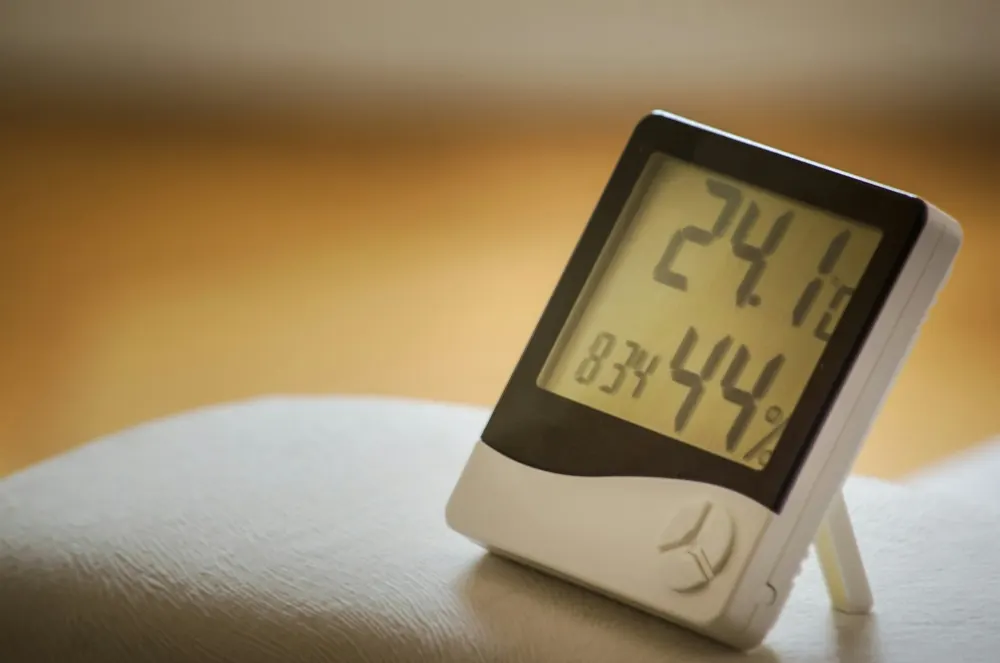
You cannot judge this by feel. A dry throat can come from a cold, and a stuffy room can feel humid when it is not. The EPA says relative humidity can be measured with a small, inexpensive humidity meter, $10 to $50 at many hardware stores. A digital model that shows temperature and humidity together, like the one in the photo at the top of this page, is the most useful kind, because you see both numbers move together when the heater runs.
Put it at about chest height, away from the heater itself, a window and any humidifier, so it reads the room rather than one hot or damp spot. Check it at the same time each day for a week. That gives you a baseline before you buy or change anything.
What are the signs that the air is too dry, or too damp?
The EPA lists the discomforts that lead people to use humidifiers: dry nose, throat, lips and skin. It also lists the household nuisances of dry winter heating: static electricity, peeling wallpaper, and cracks in paint and furniture. If your hygrometer sits below 30 percent and you notice several of these, the room is genuinely dry.
The opposite problem is just as real, and it often shows up first on glass. The EPA notes that condensation can be a sign of high humidity, and advises acting quickly to dry the wet surface and reduce the moisture source when you see condensation on windows, walls or pipes.
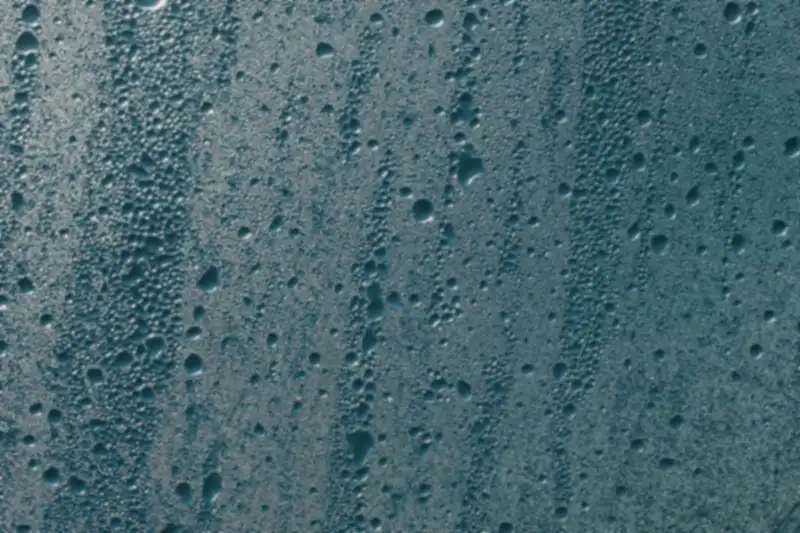
Cold window glass is the first place indoor moisture condenses, so windows act as an early warning. The DOE’s ventilation guide explains the mechanism: when moist air meets a colder surface, some of the moisture condenses into liquid, and inside a wall or an attic that can lead to wood rot and mold. A little fog on the lower corners of a single-pane window on the coldest morning is common. Water running down the glass, or a damp window sill, means it is time to turn the humidifier down.
How do you add moisture back safely?
With a humidifier you keep clean and set to a sensible level. The EPA is direct about the risk: humidifiers with tanks of standing water can grow microorganisms, and ultrasonic and impeller (“cool mist”) models in particular can disperse microorganisms and minerals from the tank into the air. The good news is that the same fact sheet gives a simple routine that keeps that risk low.
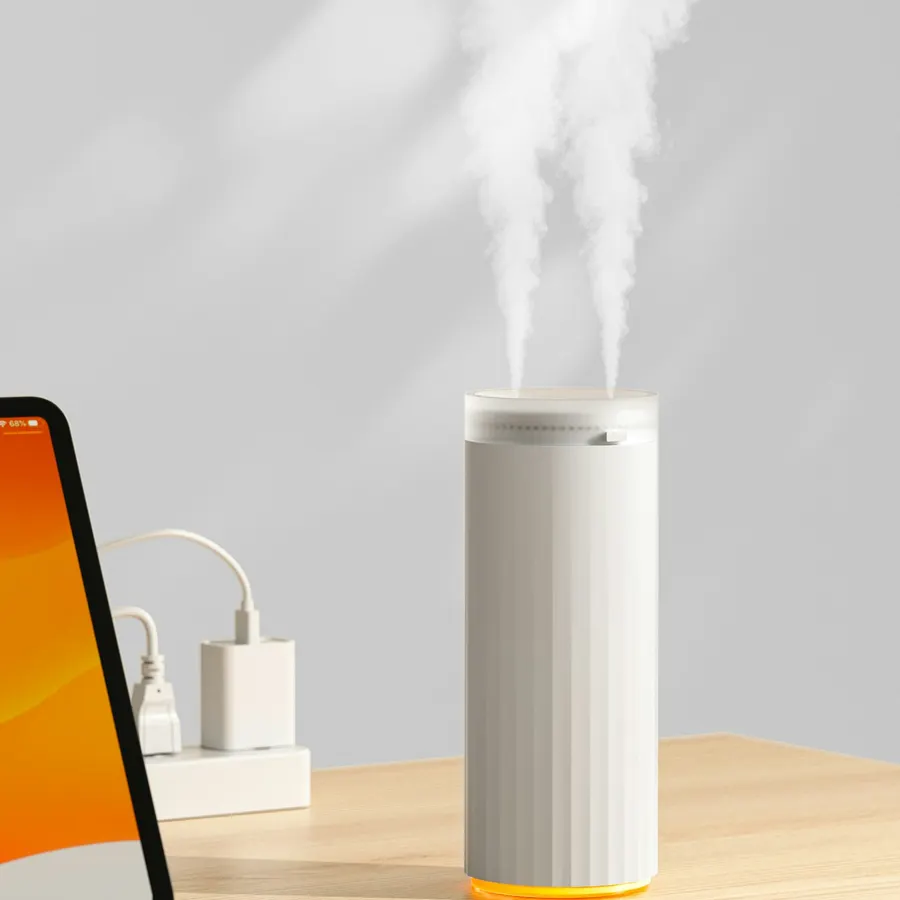
- Empty, dry and refill daily. The EPA says to empty the tank, wipe all surfaces dry and refill portable humidifiers every day, unplugging the unit first.
- Use low-mineral water. Water with low mineral content, such as water labeled “distilled”, prevents scale and the “white dust” that ultrasonic and impeller models can spread from tap water.
- Clean every third day. Scrub off scale and film, then wipe dry. If the manual does not name a cleaner, the EPA suggests a 3 percent hydrogen peroxide solution, rinsed out thoroughly.
- Stop at 50 percent. Use the built-in humidistat if your model has one, and check it against your hygrometer.
- Watch the surroundings. If water condenses on windows or walls, or carpet and drapes near the unit feel damp, move it, lower the setting or run it less.
On the type of humidifier, the EPA says evaporative models and steam vaporizers generally disperse less, if any, microorganisms into the air, and are not expected to disperse substantial amounts of minerals. Steam models bring their own caution: the EPA advises keeping them out of the reach of children, because steam and boiling water can cause burns. Whatever the type, the DOE’s ventilation guide adds that a humidifier can provide comfort in winter, but should be used only in rooms with enough air flow to prevent moisture issues.
One more rule of my own, not from the sources: keep the humidifier and the space heater apart. Water and a plugged-in electric heater do not belong on the same small table, and a few feet of distance also keeps your hygrometer reading the room rather than the mist. The placement rules guide covers where the heater should go.
How much water does a room really need?
Less than you might think, which is why the leaks matter more than the humidifier size. By my calculation, raising a closed 12 by 12 foot bedroom with an 8-foot ceiling from 30 to 45 percent at 68°F takes only about 84 grams of water, roughly a third of a cup. The catch is that a drafty room keeps losing that moisture to outdoor air, so the humidifier has to keep working. Seal the drafts and a small unit on a low setting is usually enough.
How do you keep a heated room comfortable without drying it out?
Combine the steps above into one routine. None of them needs special equipment beyond a hygrometer, and most of them also lower the heating bill.
- Heat to the lowest comfortable temperature. The bedroom table shows the humidity reading holds up better at 66 to 68°F than at 75°F.
- Close the door and stop the drafts. The DOE’s home heating overview (PDF) says up to 25 percent of a home’s heat is lost through small cracks and holes. That same leaking air carries your moisture away and brings dry air in.
- Point a fan heater at the room, not at your face. Moving warm air feels more drying on skin and eyes.
- Pre-warm instead of running all night. Shorter heating keeps the room from climbing to the warmest, driest point.
- Add moisture only if the reading says so. Below 30 percent, a clean humidifier helps. Between 30 and 50, you are already where the EPA says to be.
My winter-ready home checklist walks through the draft-sealing and thermostat steps room by room, so you can do them in one weekend.
Does a bowl of water near the heater help?
A little, but it is not worth the risk on top of the heater. A bowl of water evaporates slowly at room temperature, and the amount it adds is small next to what a drafty room loses. Never place water on or against an electric heater: a spill or tip-over puts water on a live appliance, and the CPSC’s winter safety release already asks you to keep a three-foot clear zone around portable heaters. Indoor plants and drying a load of laundry on a rack add some moisture too. A small humidifier with a humidistat is the controlled way to do it, because it stops at the level you set.
What about a heated bedroom at night?
This is where dry air gets noticed most, because you spend eight hours breathing it. The safest routine is also the one that keeps the most humidity: warm the room before bed with the door closed, then switch the heater off. The CPSC’s winter release asks you to turn heaters off when sleeping. With the heater off, the room cools slowly and its relative humidity climbs back as it does.
If the reading still sits below 30 percent, a clean humidifier on a humidistat set no higher than 50 percent is the tool, placed a few feet from the bed and well away from the heater. My overnight heater guide covers the safety side, and the quiet bedroom heater guide helps if you prefer a heater without a fan.
One note the EPA makes that deserves repeating: stop using your humidifier and contact your physician if you have respiratory symptoms you believe are linked to it, even when you follow the maintenance directions. The EPA also notes that the young, the elderly and people with lung diseases or respiratory allergies may be more sensitive to airborne pollutants. If dry-air discomfort continues despite a good humidity reading, that is a question for your doctor, not for a heater setting.
A five-minute dry-air checklist
- Measure. Put a hygrometer at chest height for a week. The target is 30 to 50 percent.
- Turn it down. Set the heater to the lowest comfortable temperature, around 66 to 68°F for most rooms.
- Seal the room. Close the door, block the gap under it and weatherstrip the worst drafts.
- Humidify only below 30 percent, with a clean tank, low-mineral water and a ceiling of 50 percent.
- Watch the windows. Water running down the glass means too much moisture. Dial it back.
If you only remember one line: the heater does not steal the water from your air, it just makes the same water go further. Keep the temperature moderate and the drafts out, and most rooms stay comfortable all winter.
Frequently asked questions
Do space heaters dry out the air?
Not directly. An electric space heater does not remove water from the air. It raises the temperature, and warm air can hold more moisture, so the relative humidity reading drops while the amount of water stays the same. That lower relative humidity is what makes a heated room feel dry.
Does an oil-filled radiator dry the air less than a ceramic heater?
Not in terms of moisture. Both are electric and neither adds or removes water, so at the same room temperature the relative humidity is the same. A ceramic fan heater can feel more drying because it blows warm air across your skin and eyes, while an oil-filled radiator heats by natural convection without a fan.
What humidity should my home be in winter?
Between 30 and 50 percent relative humidity. The EPA advises keeping indoor humidity below 60 percent, ideally between 30 and 50 percent, and says not to humidify above 50 percent because higher levels may encourage dust mites and mold. A $10 to $50 hygrometer shows where your room is.
Why does my house feel drier when the heating is on?
Mainly because cold outdoor air holds very little water, and when it leaks inside and is warmed to room temperature its relative humidity falls sharply. Heating the room further lowers the reading a little more. Sealing drafts and keeping the thermostat moderate both help the room hold its moisture.
Should I run a humidifier with my space heater?
Only if your hygrometer shows less than about 30 percent. If you do, keep the humidifier away from the heater, use low-mineral water such as distilled water, empty and dry the tank daily, clean it every third day as the EPA advises, and keep the room at 50 percent or below.
Is it safe to put a bowl of water on a space heater?
No. Never put water on or against an electric heater, because a spill or tip-over puts water on a live appliance. A bowl nearby adds very little moisture anyway. A small humidifier with a humidistat, placed a few feet away, is the controlled way to add moisture.
Do kerosene or propane heaters add humidity?
Yes. The EPA notes that combustion appliances such as kerosene heaters produce water vapor and increase humidity unless vented outside. They also release combustion gases, including carbon monoxide, so adding moisture is never a reason to use an unvented fuel heater indoors.
How do I know if the air in my room is too humid?
Look at the windows. The EPA says condensation can be a sign of high humidity. Water running down the inside of the glass or a damp window sill means it is time to lower the humidifier setting or run it less, and to dry the wet surface quickly.