
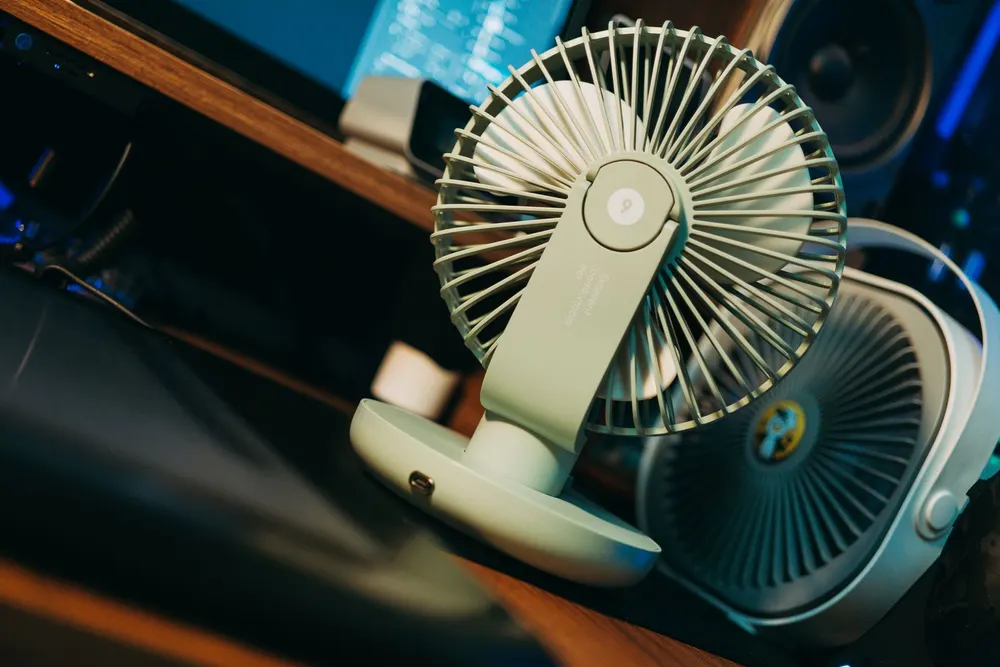
Short answer
Yes, they work, as personal coolers in dry air. A ventless “portable AC” cools by evaporating water, not by refrigeration, so it gives real relief to one person at arm’s length, on a desk or a nightstand, when the air is dry. What it does not do is cool a whole room the way a compressor air conditioner with a hose does, and in humid air its effect shrinks. Match it to that job and it does what the box promises. For a room that has to get cool, the tool is a real air conditioner.
Heads-up: some product links below are affiliate links. If you buy through one, Vitherma may earn a small commission at no cost to you.
Type “portable air conditioner” into a store search and you will find two very different boxes under one name. One is a heavy unit with a fat hose that runs to a window. The other is a small, light, cordless cooler with a water tank and no hose at all, and it is often called a “ventless” portable AC. Both are sold to people who are hot, and both can help. They just help in different ways, and knowing which is which is the whole trick.
I did not test any of these devices, so this page is built from sources I read and name: the U.S. Department of Energy, Consumer Reports, the CDC and the maker’s own product page for the one cooler I link. My earlier portable air cooler vs air conditioner guide gives the short version of the ventless question. This page goes further: what “ventless” means, where these coolers do well, how to read a listing and when to reach for something else.
What is the vent on a portable AC for, and why would a cooler not need one?
A vent hose is how a real air conditioner gets rid of heat. The Department of Energy’s home cooling guide (PDF) puts it in one line: air conditioners transfer heat from a home’s interior to the warm outside environment, and the hot coils release the collected heat into the outside air. The heat does not disappear. It moves, and the hose is the road it moves along.
The DOE’s definition of a portable air conditioner says the same thing from the other direction. It is a portable encased assembly that delivers cooled, conditioned air to an enclosed space, and it “includes a source of refrigeration.” In everyday words: a compressor and refrigerant, the same idea as a refrigerator, with a hose to carry the heat out.
Two ways a box can make air feel cooler
A small cooler with no hose is doing something else. It has no refrigeration, so it has no hot side to vent. Instead it puts water into the air, and when water evaporates it takes heat from the air around it. The DOE describes the full-size version of this, the evaporative cooler (also called a swamp cooler), as a device that cools air using evaporated water and circulates it. Because it cools by evaporation, it needs no exhaust hose.
So “ventless” is not a trick or a missing part. It describes a different method. The two methods suit different jobs, which is what the rest of this page sorts out.
| Type | How it cools | Hose to a window? | Where it helps most |
|---|---|---|---|
| Portable AC with hose | Refrigeration. The DOE’s definition says it “includes a source of refrigeration” | Yes, to carry the heat outside | A whole room, in any humidity |
| “Ventless” personal cooler | Evaporation of water. No compressor, no refrigerant | No | One person at arm’s length, in dry air |
| Plain fan | Moves air past your skin. Does not cool the air | No | Ordinary warm days. The CDC says use fans only if indoor temperatures are below 90°F |
So do ventless portable ACs really work?
They work at the job they are built for. A small evaporative cooler puts a stream of slightly cooler, slightly damp air right in front of you. Sitting at a desk in a dry room, that can feel a little cooler than a dry fan, because you get the fan’s moving air plus a little evaporative cooling on top.
The catch is scale. A palm-sized water tank and a small fan can only treat a small amount of air, so the effect is personal. Think of it as a better desk fan for dry weather, not as a smaller version of the air conditioner in a bedroom window. Sold and bought with that picture in mind, it is a fair little gadget.
The disappointment only comes when the picture is wrong. Someone reads “portable AC”, expects a cool room, and gets a cool breeze. The device did not fail. The name promised more than the method can give, and that gap is why this question keeps coming up.
Which conditions suit a ventless cooler best?
Dry air. The DOE says an evaporative cooler is a cost-effective option in an arid climate, and it also lists the limit plainly: it is “only suitable for areas with low humidity.” That is not a footnote. It is the deciding factor, because evaporation needs air that can still take on water.
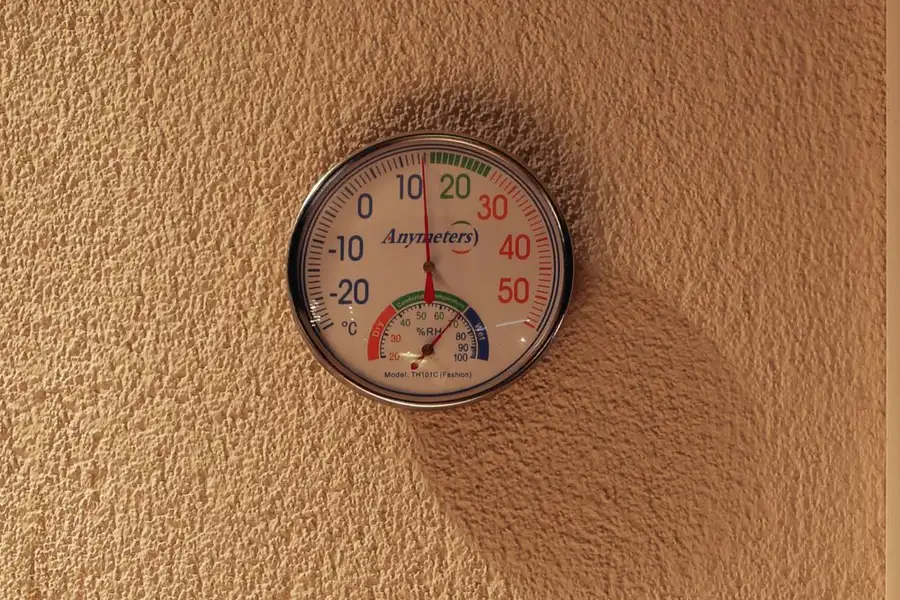
There is a second reason humidity matters, and it is about your body. The DOE notes that when there is excess humidity in the air, our body’s ability to cool itself through perspiration is inhibited. An evaporative cooler adds moisture, so in already-humid air it works against the very thing that helps you feel cool. In dry air the added moisture is not a problem. The DOE says it can even improve comfort.
A simple way to check is to put a hygrometer on the nightstand, wait half an hour, and read it on a hot afternoon. My cooler vs AC guide has the humidity rule of thumb I use, and its climate map shows which regions usually fit. If your room is dry, a ventless cooler is on the table. If it is humid, the better match is a fan or a real air conditioner.
How much cooling should you expect from one?
It helps to see what even a real portable air conditioner delivers, because that sets a fair bar. Consumer Reports, which tests them in a chamber, measures how long a unit takes to lower the temperature from 90°F to 85°F, and says that takes an average of 20 minutes. By comparison, it says the best window air conditioners can cool a room by 10°F in about 15 minutes or less. Its summary of portable units is a fair one: they do not cool as well as window units, but they can still help keep you comfortable.
A personal cooler asks for less and delivers less, and that is the honest way to think about it. It is not aimed at the room’s temperature. It is aimed at you. Sit within arm’s length, in dry air, and the small stream of cooler air is the whole product. Stand across the room and you will barely notice it.
Two habits get the most out of one. Put it close to you, aimed at your face or chest, and refill the water when the tank runs low, because an empty tank leaves you with just a fan. The evaporative cooler vs fan guide works through when the water is worth the extra cost and when a plain fan is enough.
How do you check a “portable AC” listing before you buy?
You can tell which kind of box you are looking at in a couple of minutes. Here is the order I would follow.
- Look for a hose or window kit in the box and the photos. A compressor air conditioner has to send heat outside, so a real one comes with an exhaust hose and a way to seal a window. No hose in the box means no compressor.
- Look for the words “compressor”, “refrigerant” or a cooling capacity in BTU. A real air conditioner states them. A water tank, a spray or mist function and “cool and humid air” describe evaporation. That is my own reading of the terms, not an official label, but it is a reliable one.
- Check the power source. A cordless unit that runs from a USB battery and draws a few watts is a personal cooler by design. A room air conditioner needs a wall outlet.
- Read the cooling claim for what it is measured against. “Up to 15°F cooler” means little without the starting humidity and the distance. A claim with no conditions is a headline, not a specification.
- Match the size to the job. A tank measured in milliliters cools a small zone. If the room is what you want cooled, look at the hose-and-compressor kind instead.
- Find the return window. The best test of a cooler is your own room on a hot afternoon. A stated money-back period lets you run that test at no risk.
Where does the FrostCooler fit?
The FrostCooler is the small cooler I link on this page. It is marketed under the “portable AC” name, but it works the way this page describes: a water tank and a small fan, no compressor and no hose. I have not tested it, so everything below comes from the maker’s product page.
The maker lists a 330 ml water tank, a 4000 mAh rechargeable battery with a stated runtime of 2 to 6.5 hours, a 6.5W power draw and a body of 131 x 105 x 192 mm, with a spray function that the page describes as producing cool and humid air. It describes the sound as smooth and quiet, without giving a decibel figure. Those numbers describe a cordless personal cooler for a desk, a bedside table or a sofa arm, which is the job the earlier sections describe.
Two small points make it easy to place. It runs on a battery, so you can move it from the desk to the couch, and its 6.5W draw is far below what a compressor unit needs. The runtime range is wide (2 to 6.5 hours), which usually means the setting you choose changes how long it lasts, so read the listing for which mode is which before you plan a whole evening around it.
When is a real air conditioner the better tool?
When the room itself has to get cooler, when the air is humid, or when the heat is dangerous. The CDC gives the safety side in two lines. It says to use fans only if indoor temperatures are less than 90°F, because above that a fan can increase body temperature, and to use air conditioning or find a place that has it, by dialing 2-1-1 or contacting your local health department. A small cooler is a comfort tool for ordinary hot days. It is not a heat-wave plan.
The DOE’s guide notes that a room air conditioner, which can be a window unit or a portable one, is an inexpensive way to cool one room. If you are choosing between the two, Consumer Reports says the best window units cool faster than portables, and a window unit avoids the single-hose problem it describes: a single-hose portable uses air from inside the room to cool its parts, which pulls warm air in from nearby rooms. My portable cooler vs air conditioner guide covers the hose installation, single versus dual hose and the climate map in detail, and the pillar guide shows how cooling and heating decisions fit together in one home.
The simple rule I would use: if you want relief for yourself and the air is dry, a ventless cooler is a low-effort option. If you want a cool room, or the air is humid, or the temperature is high, buy the air conditioner and enjoy how well it does the one job it was made for.
Frequently asked questions
Can a portable air conditioner really work without a vent hose?
A compressor air conditioner cannot. The U.S. Department of Energy explains that air conditioners transfer heat from a home's interior to the outside, and its definition of a portable air conditioner says it includes a source of refrigeration. A device sold without a hose is a different kind of product, an evaporative cooler, which cools by evaporating water and does give relief to one person in dry air.
Do ventless portable ACs work in humid weather?
They do their best work in dry air. The Department of Energy says evaporative coolers are only suitable for areas with low humidity, because evaporation slows when the air already holds a lot of moisture. In humid rooms a plain fan or a real air conditioner is the better tool.
Can a ventless portable AC cool a whole room?
Not a whole room. It cools the air right in front of you, which is why it belongs on a desk or a nightstand, within arm's length. For scale, Consumer Reports says that real portable air conditioners take an average of 20 minutes to lower a test chamber from 90 to 85 degrees F, and that the best window units can cool a room by 10 degrees F in about 15 minutes or less.
Is a ventless cooler the same as a humidifier?
They share a mechanism, since both put water into the air, but the goals differ. The Department of Energy notes that evaporative coolers add moisture as they cool, which can improve comfort in dry air. In humid air the extra moisture is not welcome, so check your room's humidity before you buy.
Is the FrostCooler an air conditioner?
No. It is sold under the portable AC name, but the maker's product page describes a 330 ml water tank, a spray function and a 4000 mAh battery, with no compressor and no hose. That makes it a personal evaporative cooler, best in dry air and at close range. I have not tested it, and the maker states a 30-day return policy.
How long does a cordless personal cooler run on a charge?
It depends on the model and the setting. For the FrostCooler, the maker states a runtime of 2 to 6.5 hours from a 4000 mAh battery. Read the listing to see which mode gives which runtime, and whether it can run while plugged in, before you plan around it for a whole evening.
When should I buy a real air conditioner instead?
When the whole room has to cool, when the air is humid, or when it is very hot. The CDC says to use fans only if indoor temperatures are below 90 degrees F, and to use air conditioning, or find a place that has it, when it is hotter. My portable cooler vs air conditioner guide covers hose installation and the climate map.