
Short answer
You can warm a cold rental without touching the building. Seal the drafts you are allowed to seal, close the curtains at night, add a layer to the windows, keep radiators and vents clear and let rooms you do not use stay cooler. For the room you are actually sitting in, a plug-in heater covers what is left, and it leaves with you when you move.
This article may contain affiliate links, always to the official websites of the products mentioned. If you buy through one of these links, you support my work at no additional cost to you. This never influences what I write.
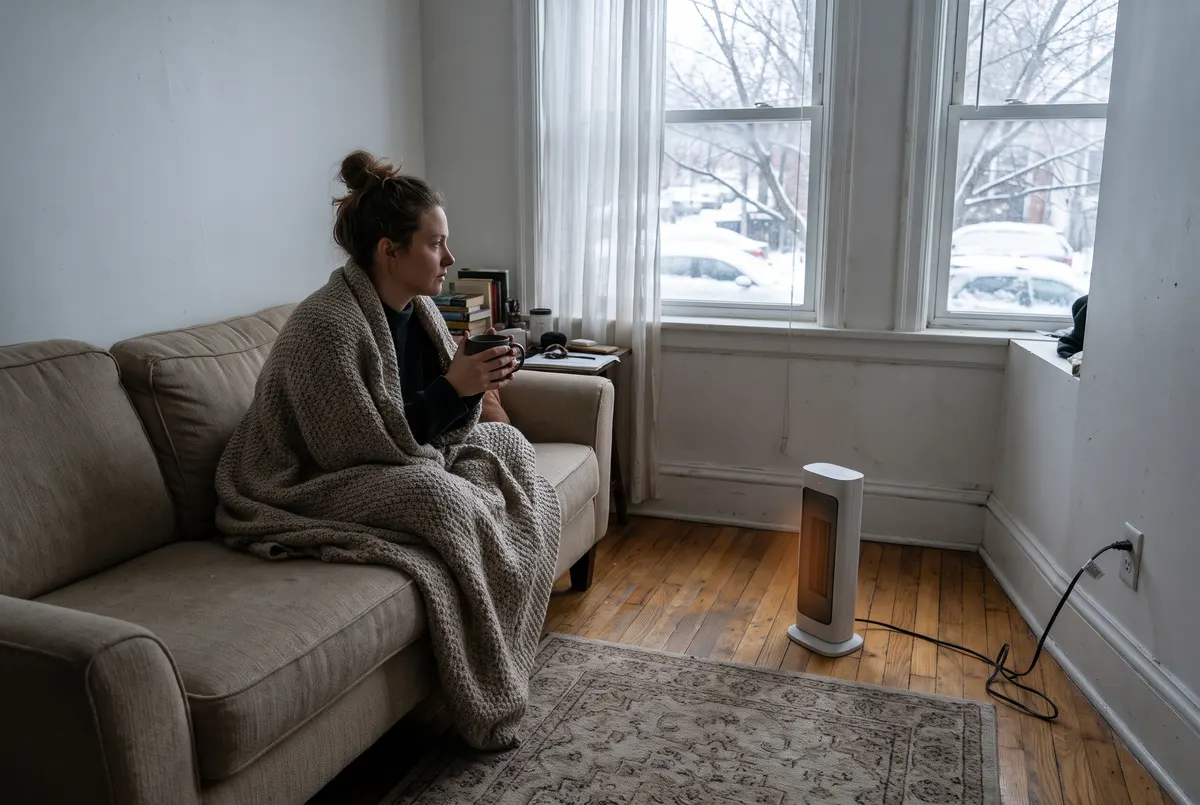
Renting means living with the heating you were given. You cannot swap the windows, add insulation or change the boiler, and the landlord may not be in a hurry to do it either. The good news is that most of what makes a rental feel cold can be improved with small, mostly reversible changes. This guide goes through six of them in the order I would try them, using the U.S. Department of Energy's Energy Saver Guide, and ends with the one that needs no permission at all: a plug-in heater.
1. Can you seal the drafts without renovating?
Often, yes, and it is the best place to start. The DOE calls air leaks among the greatest sources of energy loss in a home and says that sealing them can save 10 to 20 percent on heating and cooling bills. Its checklist is simple: weatherstrip doors and windows, caulk the seams and cracks, and put foam gaskets behind outlet and switch plates on outside walls.
To find the leaks, the DOE suggests holding a lit incense stick or a smoke pen next to windows, doors, outlets and other likely gaps on a windy day. If the smoke streams sideways, you have found one. Before you caulk or fix anything in place, ask your landlord: a lease may limit what you can attach to frames, and many landlords are happy to approve a cheap job that lowers the heating bill. My winter-ready home checklist has the full list of places to check.
In my opinion, the smoke test is the best ten minutes you can spend on a cold apartment, because it tells you which of the other five ways you actually need.
2. Do curtains really make a difference?
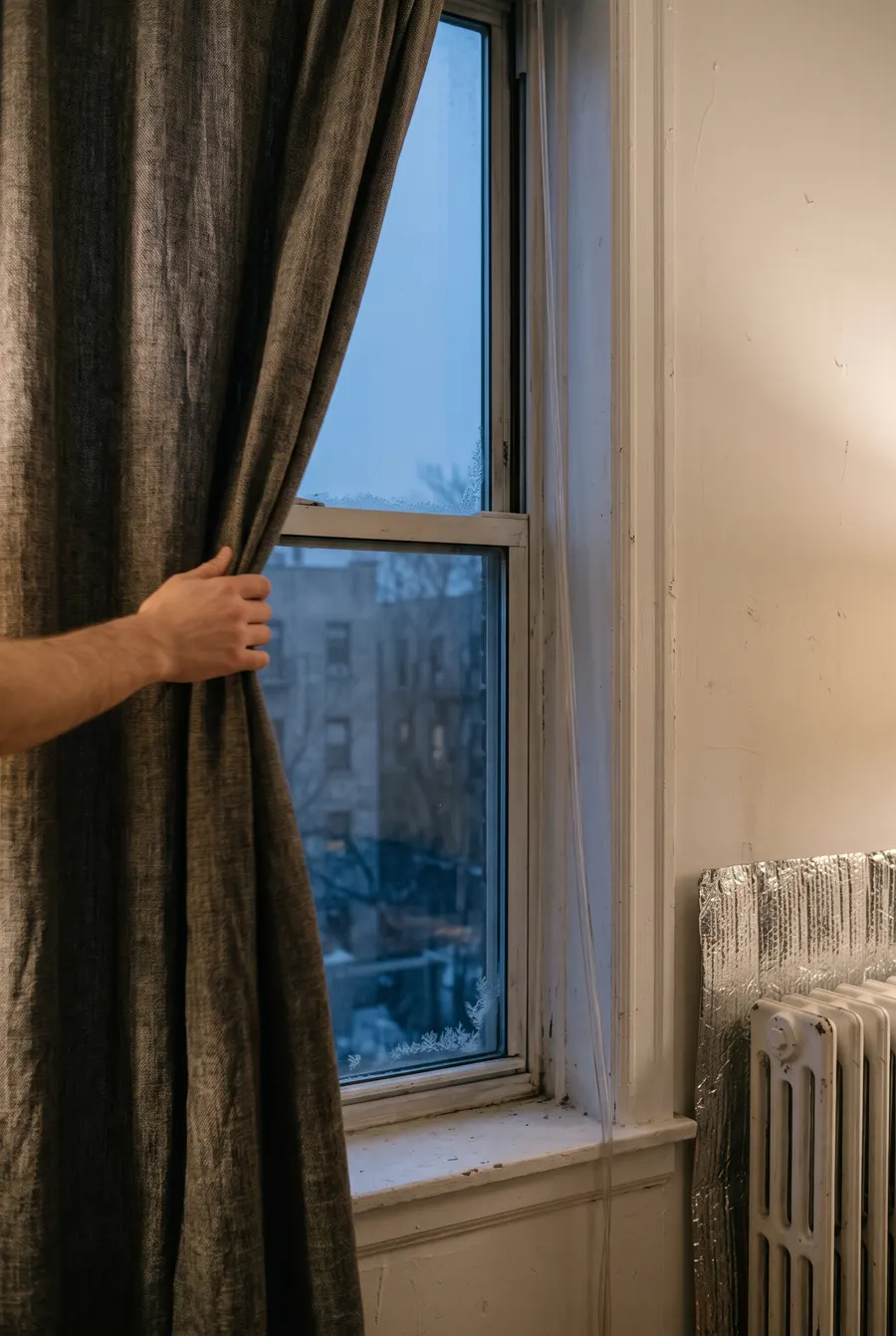
They do, and they cost nothing if you already own them. The DOE advises closing curtains and shades at night to protect against cold drafts, and opening them during the day to let in warming sunlight. On south-facing windows that daytime sun is free heat, and the night routine reduces the chill coming off cold glass.
3. What can you add to a drafty window?
Another layer. For windows that still feel drafty after sealing, the DOE suggests tight-fitting, insulating window shades, and mentions insulated cellular shades, the “honeycombed” kind you raise and lower. It also lists low-e film applied on the inside of the glass to keep heat from radiating out. Both sit on the inside, which makes them the kind of upgrade a renter can usually consider; check your lease first.
4. Is anything blocking your radiator or vent?
Check before you buy anything. The DOE tells homeowners to keep warm-air registers, baseboard heaters and radiators clean and not blocked by furniture, carpeting or drapes. A sofa pushed against a radiator, or a long curtain hanging over it, keeps the warmth from reaching the room. For a hot-water radiator on an outside wall, the DOE also mentions heat-resistant radiator reflectors placed between the wall and the radiator, so the heat goes into the room instead of into the wall.
My guide to why one room is always colder goes deeper on vents, ducts and closed doors, which you can mention to your landlord if the cause turns out to be in the building.
5. Why heat the whole apartment if you live in one room?
You do not have to. The DOE says you can save as much as 10 percent a year on heating and cooling by turning the thermostat down 7 to 10 degrees F for 8 hours a day in the fall and winter, and notes that heat pump owners should only do this with a thermostat designed for heat pumps. If you control your own thermostat, lower it while you are out or asleep, and warm only the room you use in the evening. If the building controls the heat, this is where a plug-in heater earns its place, which brings us to the last way.
The space heater vs central heating guide shows when zone heating pays off.
6. When does a plug-in heater make sense?
When the room is still cold after the free fixes, and especially when you cannot touch the thermostat. A plug-in heater needs no installation, it warms the room you are in within minutes, and it moves with you to the next apartment. It also works with the other five ways: a sealed, curtained room holds the heat the heater makes.
Two plug-in ceramic heaters on Vitherma suit this job in slightly different ways. The Heatoor is made for a small or medium closed room, so it is the one to look at for a bedroom or a living room. The Heatomi is built around the remote and the timer, so you can set the heat from the sofa or the bed. If you want the full details, see my Heatoor review and my Heatomi review.
Whichever you choose, put it on open floor along a wall near the outlet, with space in front of it; the placement guide shows the spot room by room, and the electricity guide shows what it costs per hour. For a heater sized to a small room, the small-room heater guide has the watts by room size.
What order should you try these in?
Start with the free ones: curtains (2) and a clear radiator (4) take five minutes. Then the smoke test (1), which shows how much sealing is worth doing, and a window layer (3) for the drafty glass. Turn down what you do not use (5), and add the heater (6) for the hours you are sitting in the cold. Most of the time, two or three of the six are enough to change how the apartment feels.
Frequently asked questions
How do I heat a cold apartment I can't upgrade?
Use changes you can undo. Seal drafts with weatherstripping and caulk (after asking your landlord), close the curtains at night, add an insulating shade or low-e film to drafty windows, keep radiators and vents clear and let rooms you do not use stay cooler. For the room you are in, add a plug-in heater.
Can renters seal drafts and use window film?
Usually, but check your lease first. The DOE lists weatherstripping, caulk, foam outlet gaskets, insulating shades and low-e film among its cold-weather tips. Many landlords agree to small jobs that lower the heating bill, so ask before you attach anything to a frame.
Do curtains help keep an apartment warm?
Yes. The DOE advises closing curtains and shades at night to protect against cold drafts and opening them during the day to let in warming sunlight. For windows that stay drafty, it suggests tight-fitting insulating shades.
Is a plug-in heater a good fix for a cold rental?
It is a good fix for the room you use. A plug-in heater needs no installation, warms the room in minutes and goes with you when you move. It works best together with sealed drafts and closed curtains, which keep the warmth in the room.
Should I heat the whole apartment or just one room?
If you control the thermostat, the DOE says turning it down 7 to 10 degrees F for 8 hours a day in fall and winter can save up to 10 percent a year. Warming just the room you use with a plug-in heater fits that approach. Heat pump owners should only do this with a thermostat made for heat pumps.
What should I fix first in a cold apartment?
Start with the free things: close the curtains at night and make sure no furniture blocks a radiator or vent. Then do the smoke test for drafts and add a window layer where the glass still feels cold. Add a heater last, for the room you sit in.