

Short answer
Under 200 sq ft, size matters more than brand. Plan on about 10 watts per square foot of well-insulated room: 400 to 600W for a closet or desk zone, 750 to 1,000W for a home office, and a 1,500W heater on a real thermostat for a bedroom of around 150 sq ft. Every plug-in electric heater turns electricity into heat at the same rate, so "energy-efficient" really means right-sized, thermostat-controlled and on a timer. Keep it off shared outlets, because 1,500W is already 12.5 amps on a 15-amp circuit.
Heads-up: some product links below are affiliate links. If you buy through one, Vitherma may earn a small commission at no cost to you — and I only link to gear I'd point a friend to.
Most "best small room heater" roundups rank heaters by the biggest number on the box. In a room under 200 sq ft that is backwards. The more common problem is a heater that is too big: it overshoots, cycles hard and pulls enough current to trip a breaker. So this guide starts with the room and the circuit, and only then gets to picks. The full framework for every room size lives in the pillar guide; this page is the small-room version of it.
For scale: 200 sq ft is roughly a 14 by 14 foot room. A typical bedroom is closer to 12 by 12 (144 sq ft), a home office 10 by 11 (110 sq ft), and a walk-in closet 5 by 8 (40 sq ft).
What does "energy-efficient" actually mean for a space heater?
Every plug-in electric heater sold for a room, whether it is ceramic, oil-filled, an infrared panel or a mug-sized desk unit, turns essentially all of the electricity it draws into heat. That means a 1,500W oil-filled radiator and a 1,500W ceramic heater cost the same per hour at full power. If a product page says its technology uses half the energy for the same warmth, it is comparing itself to something other than another electric heater. I walk through the cost math by wattage in how much electricity a space heater really uses.
What does change your bill is everything around the heating element:
- Size. The watts you buy versus the watts the room needs. Too many watts is not free, it just cycles off sooner and leaves you with a hotter, drier room.
- The thermostat. A heater that shuts off at a target temperature draws power in short bursts. One with only Low and High switches draws it continuously.
- The timer. Most small-room use needs the heater for the hour before you need the room, not eight straight hours.
- Where the heat lands. An infrared or radiant panel warms the person and objects in front of it. An oil-filled unit warms the whole room, slowly. At a desk or in a closet, the first is enough. In a bedroom, the second makes more sense.
So here is the definition I will use for the rest of this guide: an energy-efficient small-room heater is one whose wattage matches the room, with a thermostat that really cycles and a timer or a smart plug schedule to go with it.
How many watts does a room under 200 sq ft need?
The rule I use, and the one in the pillar guide, is about 10 watts per square foot of well-insulated indoor space. It goes up if the room has old single-pane windows, tall ceilings, sits over a garage or shares walls with the outdoors. It goes down for a small interior room with the door closed. Multiply length by width, then read across the table.
| Space | Typical size | Rule of thumb | What fits | Cost / hour at full power |
|---|---|---|---|---|
| Walk-in closet, small bathroom, desk zone | Up to 60 sq ft | 300–600W | 400–600W personal heater | $0.07–$0.11 |
| Home office, box room | 80–120 sq ft | 800–1,200W | 750–1,000W (1,500W on a thermostat also works) | $0.14–$0.18 |
| Standard bedroom | 120–150 sq ft | 1,200–1,500W | 1,500W with a low setting | $0.14–$0.27 |
| Top of the range | 150–200 sq ft | 1,500–2,000W | 1,500W as a supplement | $0.27 |
Costs use the same 18 cents per kWh as the cost breakdown, from the U.S. Energy Information Administration's residential rate table, and they assume full power. A heater on a working thermostat costs less, because it stops drawing power once the room is warm.
A worked example: an 11 by 12 foot office is 132 sq ft, so the rule says about 1,300W. A 1,500W heater on its thermostat handles that with the door closed, and once the room is warm it spends most of the hour switched off or on its 750W setting. A 10 by 10 room is 100 sq ft, which points to 1,000W, and there a 750W or 1,000W unit is the better match than a 1,500W one that will keep overshooting.
The top row deserves honesty. At 200 sq ft the rule asks for 2,000W, and almost no plug-in heater goes past 1,500W on a standard household outlet. So between 150 and 200 sq ft a portable heater is a supplement: it works when the room is well insulated and closed off, and only saves money if you turn the central thermostat down while it runs, as I explain in the four settings that actually cut the bill. Coverage numbers on product pages are also best-case figures, so I always go back to the room in the table, not to the box.
Which type of heater works best in a small room?
For the same wattage, every type costs the same per hour. The choice is about how the heat behaves in a small space, and I compare all four at length in the types section of the pillar guide. The short version for rooms under 200 sq ft:
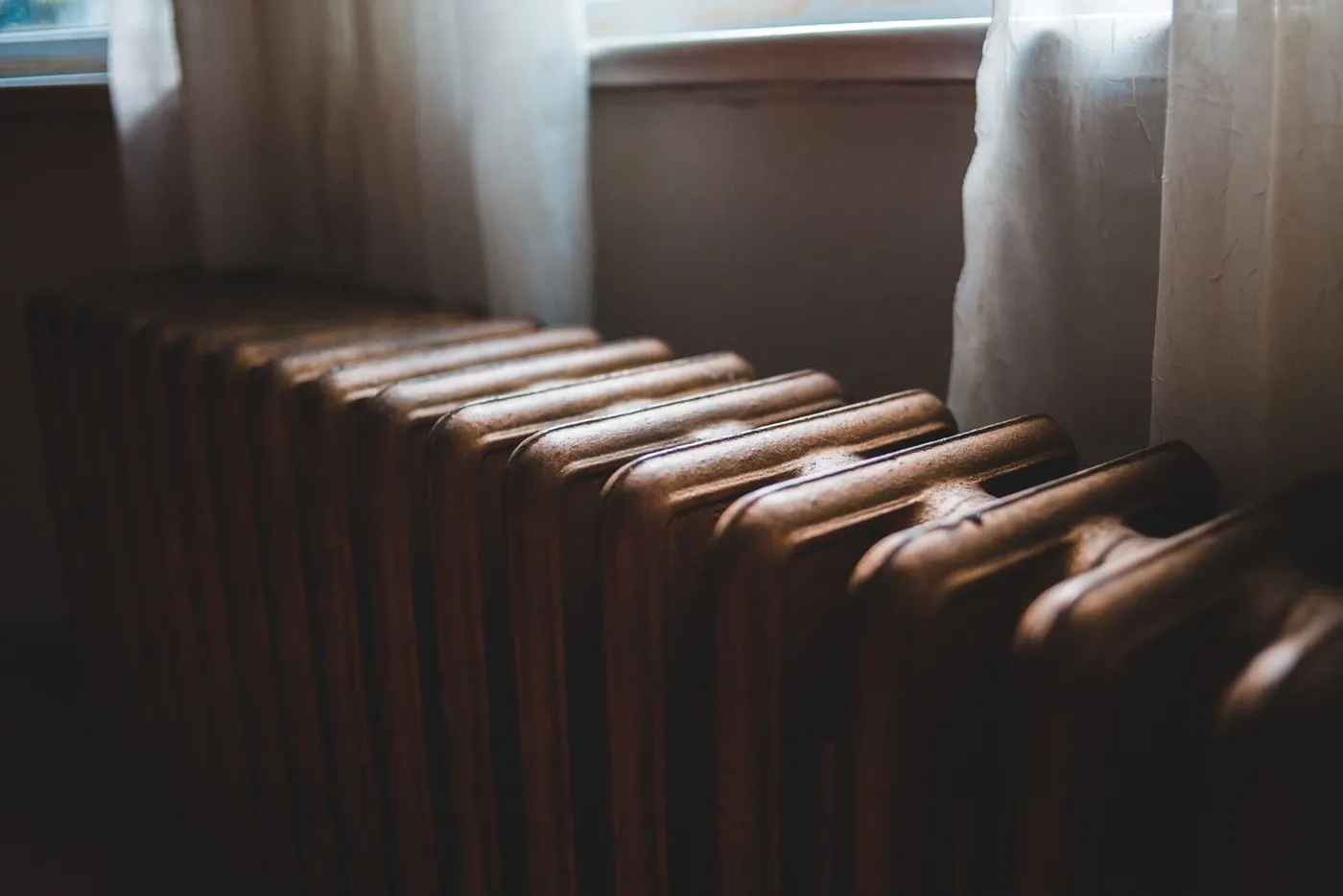
- Oil-filled radiator. Holds heat in its core and keeps radiating after the element shuts off, so it cycles less often. Slow to warm up, but the best fit for a bedroom or an office you use all day.
- Ceramic fan heater. Fastest at warming a small room, compact and light. The fan is audible, which matters more in a bedroom than in an office.
- Infrared or radiant panel. Warms you and the objects in front of it directly. It shines at a desk or in a closet, where you only need the warmth around one person, and is less useful for warming the air of a whole room. I compare it head to head with ceramic in ceramic vs infrared heaters.
- Mini personal heater (400 to 600W). Desk, nightstand or shelf format. It is not a room heater, and that is fine: in a walk-in closet or a small bathroom, it is the right size.
Which features save energy, and which are just marketing?
Four features do real work. Everything else on a box is decoration.
- A real thermostat. A target temperature the heater holds, not just a dial that goes from Low to High. This is the feature that turns wattage into savings.
- A low setting. Cost scales directly with watts, so a 750W setting on a 1,500W unit is half the cost per hour. In a small room it is often the setting you will use most.
- A timer, or compatibility with a smart plug. It removes the "I forgot it was on" cost completely.
- Tip-over and overheat shutoff, plus a cool-touch housing. These are the safety features I consider non-negotiable, the same four I list in the pillar guide.
Features I would ignore: "eco" labels that do not say what they change, wattage numbers that are not printed anywhere on the product page, and coverage claims with no room size or insulation assumption behind them. I would also skip the plug-in "power saver" boxes that claim to cut a house's bill by 40 to 90 percent. I looked into how they are meant to work in the electricity guide, and the mechanism does not lower the kWh a home meter bills for.
Before you buy any model, look up which safety standard the product page and manual list, and search the model name on SaferProducts.gov, the U.S. Consumer Product Safety Commission's public database of consumer safety reports, to see whether other owners have reported problems.
Will a small-room heater trip a 15-amp circuit?
This is the part most roundups skip. A standard U.S. outlet is 120 volts, and a 15-amp circuit tops out at 1,800W (120 x 15). A 1,500W heater at full power draws 12.5 amps. Electricians also keep loads that run for hours to 80 percent of a breaker's rating, which is 1,440W on a 15-amp circuit under the National Electrical Code's rule for continuous loads. A 1,500W heater running flat out is already just past that comfortable line before you add anything else.
What that means in a small room:
- Find out what else shares the circuit. Switch the breaker off and see which lights and outlets go dead. A vacuum, a hair dryer, a microwave or a second heater on that circuit is how breakers trip.
- Use the low setting or a lower wattage. A 750W setting or a 400 to 600W unit leaves plenty of headroom.
- Treat a tripped breaker as information. It is doing its job. It is not a reason to reset it over and over, and never a reason to swap in a bigger breaker.
- Plug directly into the wall. The Consumer Product Safety Commission says to plug electric space heaters directly into a wall outlet, never into an extension cord or power strip.
- Feel the plug. If the plug or the outlet is hot to the touch after an hour, unplug the heater and have an electrician look at that outlet.
What are the best heater picks for a closet, a home office and a bedroom?
I am not going to hand you a list of third-party model names that will be discontinued by spring. Instead, here is what I would shortlist by room, and the spec sheet to check against, so the advice holds up when the models change.
Closet, small bathroom or desk zone (up to 60 sq ft)
You need 400 to 600W, a thermostat and a timer, and nothing bigger. A mug-sized personal heater is the right tool here, and the one I review on this site is the CosyJet: 500W, a built-in thermostat, a 1 to 9 hour timer, 442 g, and it plugs into a standard outlet. It is a personal heater, not a room heater, so it belongs in the first row of the table above and nowhere else. Keep any heater away from water and only use one in a bathroom if the manual says that is what it is built for.
Home office or box room (80 to 120 sq ft)
Look for 750 to 1,500W with a low setting and a real thermostat. If you sit at a desk for a few hours and want quick warmth, a small ceramic or an infrared panel does the job. If you are in the room all day and want quiet, an oil-filled radiator is the better match. For a room-size heater I have reviewed in full, with the specs, warranty and price laid out, see my Heatoor review.
Bedroom (up to 150 sq ft)
A 1,500W oil-filled or ceramic heater with a thermostat and a timer is the right size. The habit that saves money and lowers risk is to pre-warm the room for 30 to 60 minutes and switch the heater off before you sleep. The Consumer Product Safety Commission's guidance is to turn portable heaters off when sleeping, and my overnight-safety guide covers the safety features and placement rules for anyone who decides to run one anyway.
The spec sheet I check before I buy any of them
- The wattage is printed on the product page, not implied.
- A thermostat with a target temperature, and a low setting.
- A timer, or a plug that works with a smart plug schedule.
- Tip-over shutoff, overheat shutoff and a cool-touch housing.
- A named safety standard on the page and in the manual, and no safety reports on SaferProducts.gov.
- A stated return window or warranty, so a wrong size can go back.
How should I place and run a heater in a small room?
The Consumer Product Safety Commission's advice is to keep portable heaters at least three feet away from drapes, furniture, bedding and other combustible materials. It estimates that portable heaters are involved in about 1,600 fires, 70 deaths and 150 injuries a year, based on 2020 to 2022 figures, from the same winter safety release.
Three feet of clearance on every side is a lot of floor in a small room. In a 10 by 10 room, a heater in the middle of one wall already puts the bed, the curtains or a bookshelf close to the limit. That is the real cost of a small room, and it changes what you should buy: measure where the heater will stand and the clear space around it before you order, because a heater you cannot place three feet from the bed is the wrong heater for that room. Put it on a hard, flat floor, not a rug or a shelf (my placement notes go through the detail), and check that there is a working smoke alarm in the room.
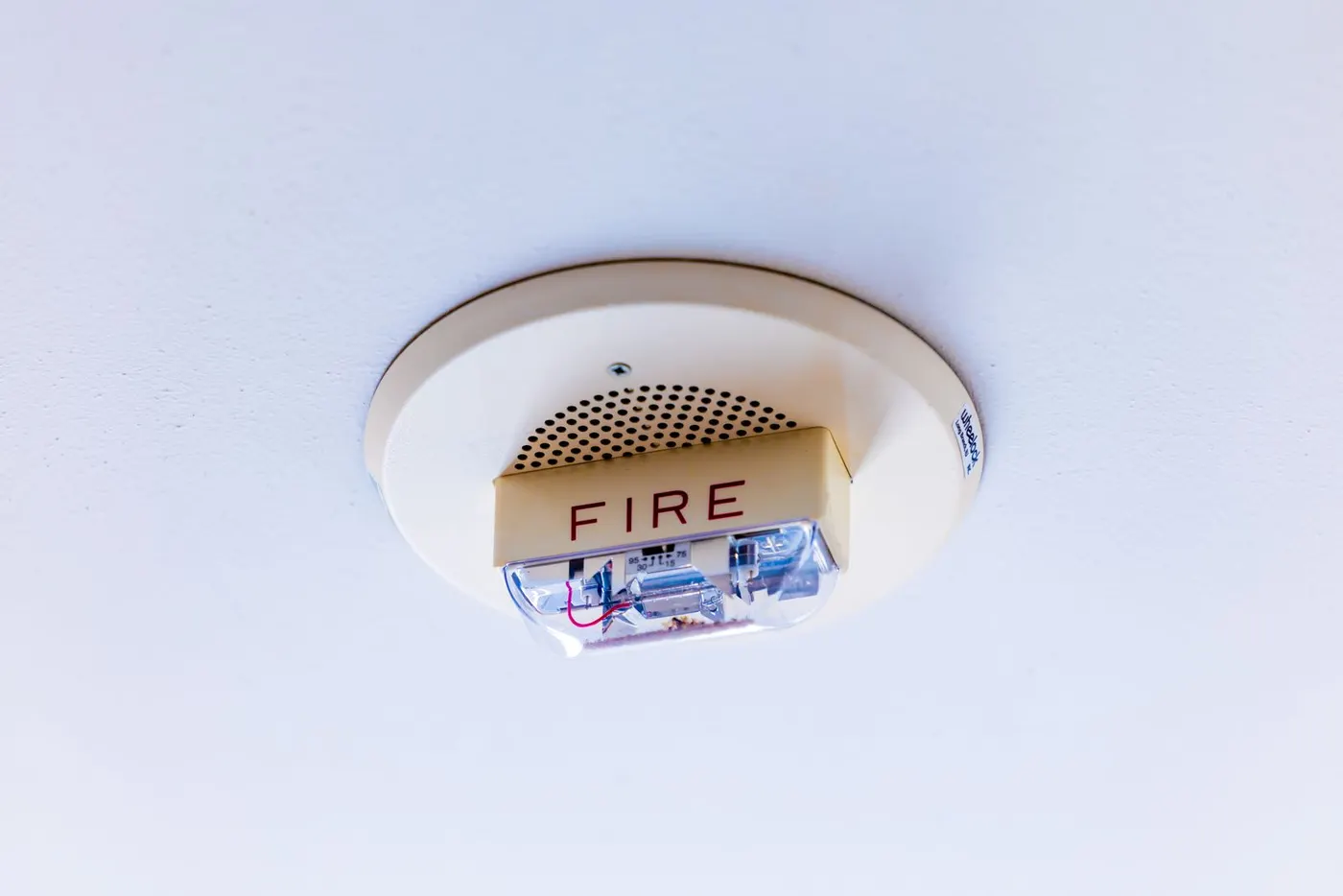
Put together, the small-room setup that works is short: pick the wattage from the table, choose a heater with a real thermostat and a low setting, put it on its own outlet with three feet of clear space, and use a timer so it runs for the hour you need it. That gets a bedroom or an office comfortable for about the price of the Low row in the table, without a single gadget.
Frequently asked questions
What size space heater do I need for a 100 sq ft room?
About 1,000 watts by the rule of 10 watts per square foot of well-insulated room. A 750W unit is enough in a well-insulated interior room with the door closed, and a 1,500W heater on its thermostat also works, because it cycles off once the room reaches temperature instead of running flat out.
Is a 1,500W heater too much for a small room?
It is too much for a space under roughly 100 sq ft, where it overshoots, cycles hard and wastes the difference as heat you then have to vent. In a 120 to 150 sq ft bedroom it is the right size, as long as it runs on a real thermostat and you use the low setting once the room is warm.
Which type of small heater is the most energy-efficient?
They are equal at turning electricity into heat, so a 1,000W ceramic and a 1,000W oil-filled radiator cost the same per hour at full power. The differences are behavioral: an oil-filled unit keeps radiating after its element shuts off and tends to cycle less, an infrared panel warms the person in front of it, and a ceramic fan heater warms a small room fastest.
How much does it cost to run a 750W heater for 8 hours?
About $1.08 at full power, using 18 cents per kWh (0.75 kW x 8 hours x $0.18). A heater with a working thermostat costs less than that, because the element switches off for stretches once the room is warm.
Will a space heater trip my breaker?
It can. A 15-amp circuit tops out at 1,800W, and a 1,500W heater at full power already draws 12.5 amps, so a vacuum, hair dryer or second heater on the same circuit will trip it. The breaker is doing its job. Move the other loads, choose a lower wattage, and never plug a heater into an extension cord or power strip.
Is it safe to leave a small space heater on overnight?
The U.S. Consumer Product Safety Commission's guidance is to turn portable heaters off when you sleep. My overnight-safety guide covers the four safety features that matter and how to set up the room if you decide to run one anyway, but the lowest-risk pattern in a small bedroom is a timer that pre-warms the room and switches off before you fall asleep.