
Short answer
A warm, safe winter starts with the whole house and then goes room by room. Before the first cold night, have the furnace or boiler checked, change the filter, test the smoke and carbon monoxide alarms, seal the worst drafts and set the thermostat to 68°F while you are awake. Then give each room the heat it actually needs: a room heater on a thermostat for the bedroom, a small personal heater for the desk, no portable heater in a wet bathroom, and a 3-foot clear zone around every heater in the house. Done in that order, it takes one weekend and pays you back all season.
This article may contain affiliate links, always to the official websites of the products mentioned. If you buy through one of these links, you support my work at no additional cost to you. This never influences what I write.
Most winter heating problems show up on the first truly cold night. The furnace makes a noise nobody heard in April, a bedroom stays cold, someone drags an old space heater out of the closet and plugs it into the nearest power strip. None of that is bad luck. It is a checklist that did not get done in the fall.
This page is that checklist. It starts with the jobs that cover the whole house, because they make every room easier to heat, and then walks through the rooms one at a time: bedroom, living room, home office, bathroom, kids’ room and garage workshop. The rules come from sources I read and link: the U.S. Department of Energy, the Consumer Product Safety Commission, the CDC, the U.S. Fire Administration and the National Fire Protection Association. Where I add my own reasoning, I say so.
What should you do for the whole house before the first cold night?
Start with the main heating system, because it does most of the work. The Department of Energy’s guide to home heating and cooling (PDF) says to hire a professional HVAC technician for a checkup, and that furnaces should be checked in the fall. It also says a regular maintenance schedule can cut heating and cooling costs by 5% to 10% and help the equipment last longer.
The safety agencies ask for the same visit. The CPSC’s winter safety release says to have a professional inspect all fuel-burning heating systems each year, including furnaces, boilers, fireplaces, wood stoves, water heaters, chimneys, flues and vents. So one appointment in September or October covers both the bill and the safety side.
Three small jobs you can do yourself
- Change or clean the filter. The DOE says to clean or replace filters monthly during the seasons of peak use. Buy a few before winter so the monthly swap actually happens.
- Clear the vents and radiators. The DOE lists keeping air vents clean and unobstructed as a best practice. A sofa pushed against a return vent or a curtain over a radiator quietly wastes heat all winter.
- Check the space heaters in storage. Before a portable heater comes back into use, look at the plug and cord for damage or scorch marks, and check the model against the CPSC recall list. My placement guide covers the recall check, and the pillar guide has the start-of-season cleaning routine.
Which alarms need to be working before heating season?
Smoke alarms and carbon monoxide alarms, on every level of the home. The CPSC is specific about where they go: smoke alarms on every level and inside each bedroom, CO alarms on every level and outside sleeping areas. It adds that alarms should be battery-operated or have battery backup in case of a power outage, and that interconnected alarms are best, because when one sounds, they all sound.
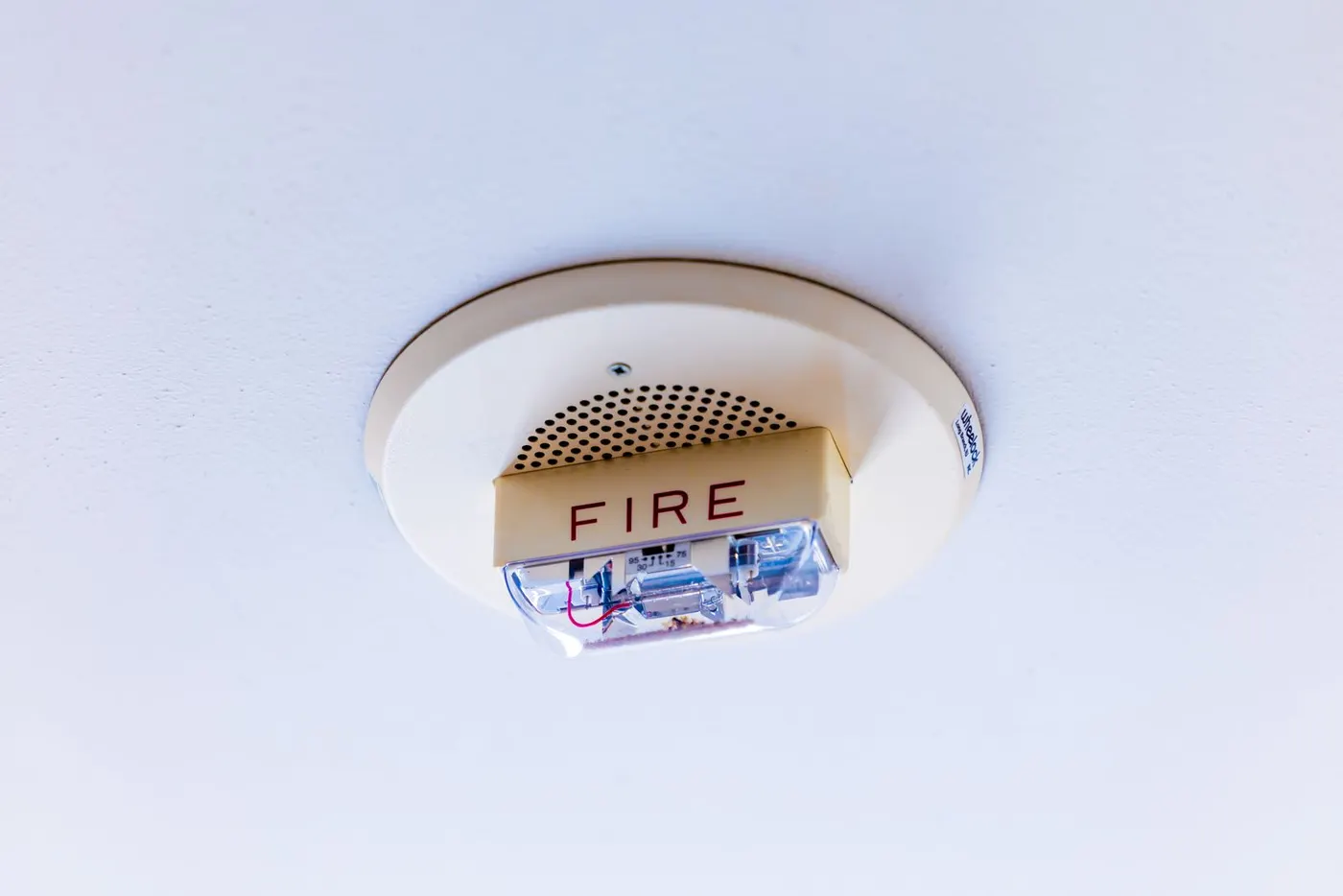
Then keep them working. The CPSC says to test alarms every month and replace batteries at least once a year, or to install alarms with sealed 10-year batteries. The CDC’s carbon monoxide page suggests checking CO detector batteries when you change the clocks in spring and fall, and replacing the detector as the maker says or every 5 years.
This matters even in an all-electric home. The DOE’s home heating overview (PDF) puts it plainly: since safety is a big concern with space heaters, every home should have a carbon monoxide detector installed.
How do you stop heat leaking out before you add any heater?
Seal the gaps first, because every heater works harder in a leaky room. The DOE’s heating overview says up to 25 percent of a home’s heat is lost through small cracks and holes, and it recommends weatherstripping around doors and windows to keep warm air from escaping. A draft snake under an exterior door and a strip of foam weatherstripping on a loose window are cheap and take an afternoon.
The same DOE sheet has three habits that cost nothing:
- Curtains: open them during the day to let the sun warm the house, and close them at night to keep the heat inside.
- Ceiling fans: set them to spin clockwise so they push the warm air that rises back down.
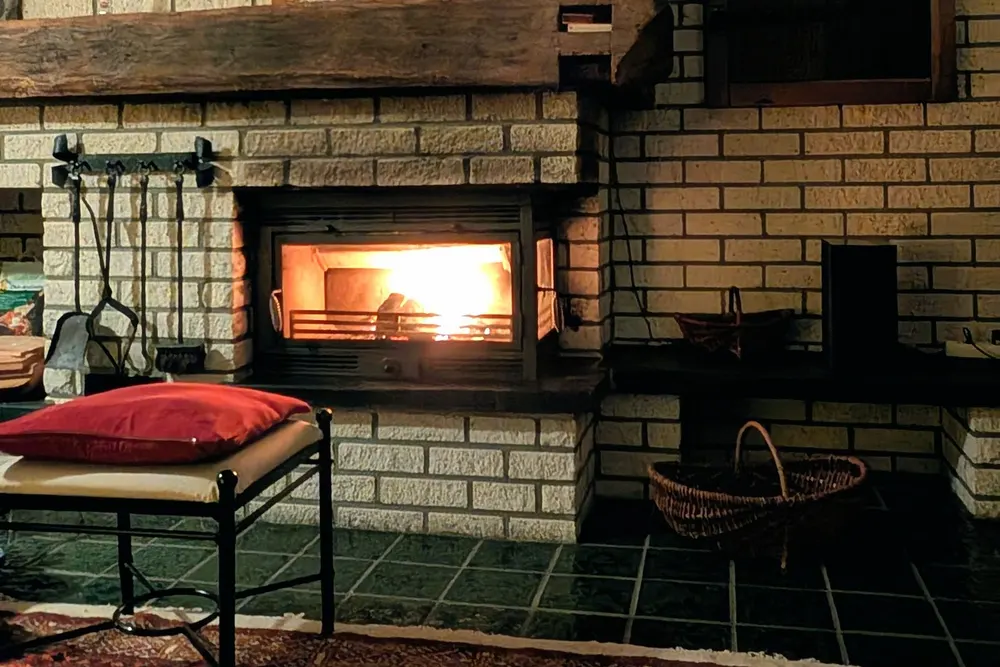
- Fireplace damper: the DOE’s guide says to close the damper when the fireplace is not in use. An open damper is an open window in the roof.
The DOE also suggests sealing ducts and insulating them where they run through unheated spaces such as an attic or crawlspace. That one is usually a job for the technician, so add it to the fall visit.
What thermostat settings make sense for winter?
The DOE’s starting point is 68°F while you are awake, set back while you sleep. Its guide says you can save 1% on heating bills for each 1°F you set back over an eight-hour period, and as much as 10% on heating and cooling by adjusting the thermostat when you are away and while sleeping. It also reminds you to keep your comfort in mind if the setting gets too low.
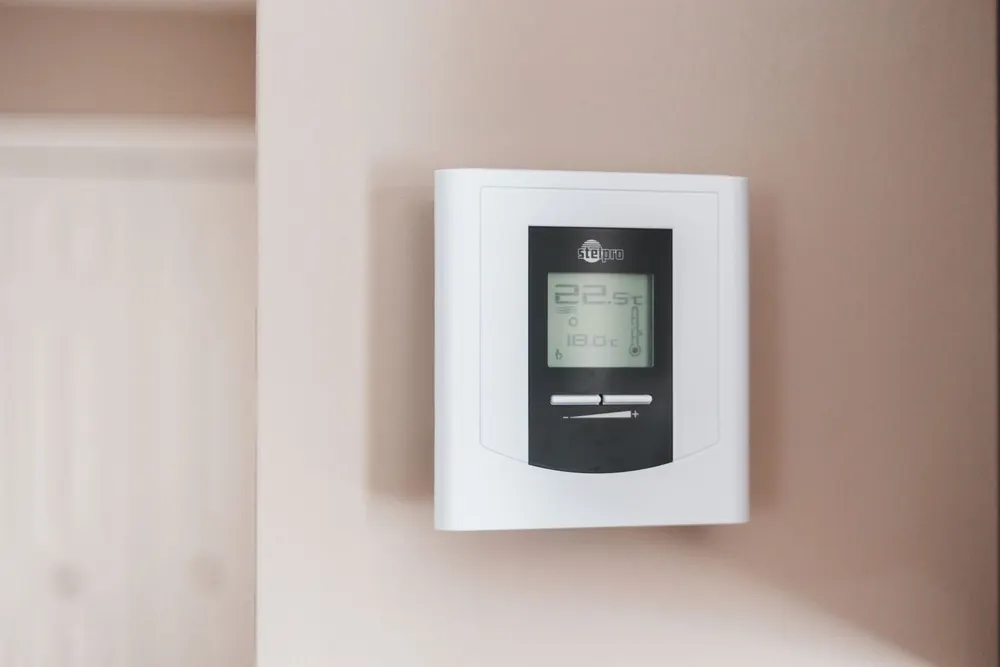
A programmable thermostat is what makes this painless, because it lowers the heat at night and brings it back before you get up. The DOE’s overview estimates about 10 percent a year in savings from using one.
Here is where room heaters fit in, and it is my own reasoning built on those DOE numbers. If the house can sit a few degrees cooler while one small room stays warm, you collect the setback savings in every other room. That is the idea behind zone heating, and the DOE describes space heaters exactly that way: they provide supplemental heat to a specific room. My space heater electricity guide shows how to put a price on the heater side of that trade.
How do you pick the right heater size for each room?
The rule I use across this site is about 10 watts per square foot of well-insulated room. A 150 sq ft bedroom points to a 1,500W heater on a thermostat, a desk zone needs far less, and past about 200 sq ft one plug-in heater is at its limit, because a standard 15-amp household circuit at 120 V handles about 1,800W in total. The small-room heater guide has the full table and the circuit math.
| Room | What usually fits | The setup rule that matters most |
|---|---|---|
| Bedroom (about 150 sq ft) | A room heater with a thermostat and a timer | Warm the room before bed, switch it off when you go to sleep |
| Living room | A 1,500W room heater, with the doors closed | 3 feet clear of sofas, throws and curtains |
| Home office or desk | A small personal heater, 400 to 600W | Straight into the wall, never into the desk power strip |
| Bathroom | Usually no portable heater | Keep electric heaters away from water |
| Kids’ room or nursery | Pre-warm, then switch off | A 3-foot kid-free zone around any heater |
| Garage workshop | Depends on the space and the fuel | Nothing flammable within 3 feet, no engines or generators running inside |
The last column comes from the CPSC and NFPA rules quoted in each room section below. The first two are my own summary of the sizing rule above.
How should you set up heating in the bedroom?
Treat the bedroom heater as a pre-warmer. Run it for the half hour before bed with the door closed, then switch it off when you lie down. The CPSC says to turn off heaters when sleeping, and the U.S. Fire Administration says to turn space heaters off when leaving the room or going to bed. A thermostat and a timer make this easy, because the room reaches its target and the heater shuts itself down.
Placement is the other half. Beds, bedding and curtains are exactly the things the CPSC tells you to keep at least three feet away, so pick a spot along a wall with that whole zone clear. If you like some warmth through the night, a better plan is a warmer duvet and a slightly higher thermostat setting on the central system. My overnight heater guide goes through that question in detail, and the quiet bedroom heater guide covers noise, since a fan heater running while you read in bed should not keep you awake.
A room heater that suits a closed bedroom
The Heatoor is the room heater I have used myself, in a closed room of about 12 m² (roughly 129 sq ft), which is bedroom size. With the door closed, the air felt warmer within a few minutes, it ran quietly, and there was nothing to install: plug in, set a temperature on the touch panel or the remote, and it works. It uses a PTC ceramic element, has overheat protection and an automatic shut-off, and includes a timer, which is exactly the pre-warm-then-off routine this section describes. The maker rates it for up to 538 sq ft in a closed, well-insulated room; my own experience is with the smaller room, and I wrote up the details in my Heatoor review.
What about the living room?
The living room is usually the biggest room and the one with the most furniture, so it is where the 3-foot rule is hardest to keep. Walk the room once with the heater’s cord length in mind and look for the outlet with open floor in front of it, away from the sofa, the curtains and the path people take to the door. That outlet decides where the heater lives for the winter, and the furniture stays where it is.
Size matters more here too. A 1,500W heater warms a closed living room of 200 to 300 sq ft, but an open plan that runs into a kitchen or hallway is a different job, and there a heater creates a warm zone around you rather than a warm room. The ceramic vs infrared guide explains why infrared often does better in rooms with drafts and open doorways.
If the living room has a fireplace
The NFPA’s heating safety tip sheet (PDF) asks for a sturdy screen to stop sparks from flying into the room, and says ashes should be cool before they go into a metal container kept a safe distance from the home. The CDC adds a yearly chimney check or cleaning. The CPSC explains why: fireplaces can spark fires if chimneys are cracked, blocked or coated with creosote.
How do you heat a home office without heating the whole house?
With a small heater aimed at you, not the room. If one person works at a desk all day, warming the entire house for that person is the expensive way to do it. A personal heater in the 400 to 600W range warms the space right around the chair, and the rest of the house can stay on the lower setting the DOE numbers reward.
The cost is easy to work out. A 500W heater uses 0.5 kWh for every hour it runs at full power. At about 18 cents per kWh, the U.S. residential average from the EIA that I use across this site, that is about 9 cents an hour, and less once a thermostat starts cycling the heater off.
The setup rule that matters most at a desk is the outlet. A desk is where the power strips live, and the CPSC says to plug electric space heaters directly into a wall outlet, never into an extension cord or power strip. The other is the 3-foot zone: under a desk, your chair, a wastebasket and a tangle of cables are all inside it. A small heater on the floor beside the desk, with the zone clear, works better than one buried under it. The placement guide has more on the desk case.
A personal heater sized for a desk
The CosyJet is a 500W plug-in ceramic heater built for this job. The maker publishes a full spec sheet: 129.5 x 91 x 144.5 mm, 442 g, a built-in thermostat with a digital display and a timer from 1 to 9 hours. It is designed to plug straight into a grounded wall outlet, which is also the safest way to run any heater. The thermostat is the useful part at a desk: you set a target and it cycles itself instead of running flat out until you notice. My CosyJet review has the running-cost table at different electricity rates.
Is a space heater a good idea for a cold bathroom?
Usually not. The CPSC says to keep electric heaters away from water and never to touch one when you are wet, and a bathroom puts wet hands, wet floors, steam and outlets next to sinks all in one small room. Unless the heater’s manual says the model is designed for bathroom use, keep portable heaters out.
There are better ways to take the chill off. Warm the bedroom or hallway next door before a shower and leave the bathroom door open for a few minutes. For a bathroom that is always cold, a heater built into the wall and installed by an electrician is the permanent answer. The water rule in the placement guide applies the same thinking to kitchens, laundry rooms and basements that flood.
What changes in a kids’ room or nursery?
Everything depends on keeping children out of reach. The NFPA asks for a three-foot “kid-free zone” around open fires and space heaters, and its portable heater checklist (PDF) adds a heater with a thermostat and overheat protection, an auto shut-off that turns it off if it tips over, a solid flat surface, and a spot out of the way of foot traffic that never blocks an exit.
In practice that means the same routine as the adult bedroom, only stricter. Warm the room ahead of time, switch the heater off before the child comes in, and take it out of the room if you cannot keep the zone clear. The CO alarm outside the sleeping area, from the alarms section above, is part of this room’s checklist too.
Can you heat a garage workshop safely?
Yes, if you clear the space around the heater first. The USFA’s rule is to keep anything that can burn at least 3 feet from all heat sources, and a garage is full of things that burn: gasoline, paint, solvents, aerosol cans and sawdust. Clear that zone before the heater goes in, and keep fuel containers well away from it.
Garages also carry a carbon monoxide risk that other rooms do not. The CDC says never to run a car or truck inside a garage attached to a house, even with the garage door open. The CPSC says never to use a generator inside a home, basement, shed or garage. Many garage heaters burn fuel, which brings its own rules: the CPSC says never to refuel a fuel-burning portable heater while it is in use, and the NFPA tip sheet says to always use the fuel the maker specifies.
What should you never use to heat your home?
Several ways of getting warm show up every winter and every one of the agencies above warns against them.
- The oven. The NFPA and the USFA both say never to use an oven to heat your home, and the CDC says never heat your house with a gas oven.
- Charcoal and camp stoves indoors. The CDC says never to burn charcoal indoors or use a portable gas camp stove indoors.
- A generator inside. The CDC says generators belong outside, more than 20 feet from windows, doors and vents.
- An extension cord or power strip for an electric heater. The CPSC says straight into a wall outlet, every time.
The reason behind the list is real. The CPSC counts about 1,600 fires a year associated with portable heaters, with an average of 70 deaths and 150 injuries a year from 2020 to 2022, and the NFPA tip sheet notes that half of home heating fires are reported in December, January and February. The good news is that the rules above prevent most of them, and they cost almost nothing to follow.
The winter-ready checklist, in one place
Here is the whole page in the order I would do it. Print it, or save it as a PDF on your phone or computer.
Whole house, once in the fall
- Book the furnace or boiler checkup, plus the chimney, flue and vents if you have fuel-burning equipment.
- Change the filter, and buy enough for a monthly swap through the season.
- Test every smoke and CO alarm, and replace batteries or old units.
- Weatherstrip the draftiest door and window, and close the fireplace damper when it is not in use.
- Set the thermostat to 68°F for waking hours, with a setback at night.
- Clear furniture and curtains away from vents and radiators.
Every room with a portable heater
- Check the plug, the cord and the recall list before the first use.
- Put it on a solid, flat surface with 3 feet of clear space around it.
- Plug it straight into a wall outlet, never an extension cord or power strip.
- Keep it away from water, foot traffic and exits.
- Keep children and pets outside the 3-foot zone.
- Switch it off when you leave the room or go to bed.
For the reasoning behind each heater rule, the placement guide covers all seven in depth, and the pillar guide ties heating and cooling together for the whole year.
Frequently asked questions
When should I get my home ready for winter heating?
In the fall, before the first cold night. The U.S. Department of Energy says furnaces should be checked in the fall by a professional HVAC technician, and the CPSC asks for a yearly professional inspection of all fuel-burning heating equipment, chimneys, flues and vents. Booking that visit in September or October leaves time to fix anything the technician finds.
What temperature should I set my thermostat to in winter?
The Department of Energy suggests 68°F while you are awake, set back while you sleep. It says you can save 1% on heating bills for each 1°F you set back over an eight-hour period, and it reminds you to keep your comfort in mind if the setting gets too low. A programmable thermostat does the setback for you.
How often should I change my furnace filter in winter?
The Department of Energy says to clean or replace filters monthly during the seasons of peak use. A clean filter helps lower heating bills and extends the life of the equipment, so it is worth buying a few filters before winter starts.
Where should smoke and carbon monoxide alarms go?
The CPSC says smoke alarms belong on every level of the home and inside each bedroom, and CO alarms on every level and outside sleeping areas. They should have battery backup, ideally be interconnected, and be tested every month. The CDC suggests replacing a CO detector as its maker says or every 5 years.
Is it safe to use a space heater in a bathroom?
Usually not. The CPSC says to keep electric heaters away from water and never to touch one when you are wet. Unless the heater's manual says the model is designed for bathroom use, it is safer to warm the room next door before a shower or to have a wall heater installed by an electrician.
Can I leave a space heater on overnight in the bedroom?
The CPSC says to turn off heaters when sleeping, and the U.S. Fire Administration says to turn them off when leaving the room or going to bed. The safer routine is to pre-warm the bedroom with the door closed, use the heater's timer, and switch it off when you lie down.
What size space heater do I need for each room?
A useful rule is about 10 watts per square foot of well-insulated room. That points to a 1,500W heater on a thermostat for a bedroom of about 150 sq ft and a 400 to 600W personal heater for a desk. A standard 15-amp household circuit handles about 1,800W in total, which is why plug-in heaters top out at 1,500W.