
Short answer
A room heater pays off when your home has central heating and you do not need to warm all of it. Turn the central thermostat down or off for the rooms you are not using (in mild winters you may not need central heat at all, and in places with hard freezes keep it low rather than off), close the door of the one you are in, and let a small plug-in heater keep that room comfortable. The saving is substantial when the whole house does not need to be heated, and it is biggest with electric central heat, in a large home where you live in one or two rooms, or in a room the central system barely reaches. With gas heating it works as a trade: less heat for the rest of the house in exchange for a warm room where you spend your time. That is why it is worth keeping one or two ready for the first cold snap, one for the room and one for the desk or the cold corner.
This article may contain affiliate links, always to the official websites of the products mentioned. If you buy through one of these links, you support my work at no additional cost to you. This never influences what I write.
Every winter the same thought comes up: if I only sit in one room, why am I warming the whole house? Zone heating is the answer. It means heating only the rooms you use, and a small plug-in heater is the simplest way to do it. This page shows the homes where it saves the most, which heater fits which situation, and how to set it up so the saving shows on your bill.
The prices come from the U.S. Energy Information Administration, the heating advice from the Department of Energy, and the safety rules from the Consumer Product Safety Commission. Where a figure is my own calculation or illustration, I say so.
In which homes does zone heating save the most?
Match the idea to your house. This is my own reading of the Department of Energy’s home heating overview (PDF), which describes space heaters as providing supplemental heat to a specific room, and says portable heaters are used when the main heating system is inadequate or when central heating is too costly to install or operate.
| Your situation | How zone heating fits | Why it works |
|---|---|---|
| Mild winters (California, Florida, Texas and similar) | Strong fit | The central system can stay off, and one or two heaters cover the cold mornings and evenings |
| Electric baseboards or an electric furnace | Strong fit | Heat costs the same from the wall or the heater, so every room you stop heating is money kept |
| Large home, you live in one or two rooms | Strong fit | The bigger the part you stop heating, the bigger the saving |
| Cold room the central system barely reaches | Strong fit | The Department of Energy lists this exact case: the main system is inadequate for that room |
| Home office or den used all day | Good fit | Warm one closed room for the hours you are in it, and let the rest of the house rest |
| Gas furnace, family at home | Comfort in the right spot | Warm exactly the chair, desk or bed you use, with a thermostat and a timer |
| Heat pump | Cold-spot helper | The heat pump handles the house, and the heater takes care of the one chilly corner |
If you live in one of the first four situations, a heater or two is one of the easiest ways to cut the heating bill. The next section shows which one fits which job.
Which plug-in heaters should you keep ready?
Two heaters reviewed on this site cover the two jobs zone heating usually needs: warming a small closed room, and warming one spot. Having both ready means you can heat the room you are in and, on a colder day, the desk or the bedside as well. What they offer is the control that makes zone heating work: a thermostat, a timer and a safety shut-off.
For the room you use: a closed-room heater
The Heatoor uses a PTC ceramic element and plugs into a normal wall outlet. You set a temperature on the touch panel or the remote, and it includes a timer, overheat protection and an automatic shut-off, plus a fan-only mode for summer. The maker states coverage of up to 538 sq ft in a closed, well-insulated room. I used it in a closed room of about 12 m² (roughly 129 sq ft), and with the door shut the air felt warmer within a few minutes. That is one small room, not a lab test. The offer page does not list a wattage, so the easiest way to price it is a plug-in wattmeter (usually $12 to $20), which shows the real draw in seconds. The Heatoor review has the full spec table.
For one spot: a personal heater
The CosyJet is a 500W plug-in ceramic heater. The maker publishes a full spec sheet: 129.5 x 91 x 144.5 mm, 442 g, a built-in thermostat with a digital display and a timer from 1 to 9 hours. At 500W it draws 0.5 kWh per hour at full power, about 9 cents an hour at 18.31 cents per kWh, and less once the thermostat starts cycling it. It suits a desk, a nightstand or a cold corner, and it is light enough to carry to wherever you are. My CosyJet review has the running-cost table at different electricity rates.
Which one fits you?
Both work well; they just do different jobs. Pick by what you want to warm:
| If you want to… | A good fit | Why, in plain words |
|---|---|---|
| Warm a whole small room with the door closed | Heatoor | The maker says it covers up to 538 sq ft in a closed, well-insulated room, and it has a remote |
| Warm just yourself at a desk or nightstand | CosyJet | It is small and light (442 g) and uses only 500W, so it costs about 9 cents an hour at full power |
| Set it from the sofa or the bed | Heatoor | It comes with a remote and a touch panel |
| Carry it from room to room | CosyJet | Its compact body is easy to pick up and move to where you are |
| Use a fan in summer too | Heatoor | It has a fan-only mode, so it keeps working when the heating season ends |
Keeping one of each is a simple setup: the Heatoor for the room where you spend the evening, the CosyJet for the desk, the bedside or the cold corner. My small-room heater guide has the sizing table if you want to double-check the room.
What is zone heating, and why does it save money?
Zone heating means heating only the rooms you use. The Department of Energy’s overview describes central heating systems as furnaces and boilers, where heat is generated in one place and distributed through the whole house, and it says space heating is the largest energy expense in a home, about 45 percent of the energy bill. Heating rooms nobody is using is part of that 45 percent. Warm the room you are in, let the rest of the house run cooler, and that part of the bill shrinks.
It works best as a pair: a heater in your room and a lower central thermostat for the rest. The heater gives you the warmth where you are, and the thermostat is what turns it into savings.
What does it cost to run a plug-in heater?
You pay only for the hours the heater runs. The EIA puts the U.S. average residential electricity price at 18.31 cents per kWh for July 2026, and the formula is simple: kilowatts times hours times your price. Here is what a heater costs at full power, using my own calculations:
| Heater power | Per hour | 4-hour evening | 30 evenings |
|---|---|---|---|
| 500W (personal size) | $0.09 | $0.37 | $10.99 |
| 900W (medium) | $0.16 | $0.66 | $19.78 |
| 1,500W (high) | $0.27 | $1.10 | $32.96 |
A heater with a working thermostat switches off once the room is warm, so a real evening costs less than these full-power figures. Your own rate may be lower or higher, and the same EIA table shows prices that vary a lot by state.
With electric central heating the math is especially friendly, because a kilowatt-hour costs the same from the wall or from the heater. As an illustration, picture a home where the central system delivers 30,000 Btu of heat per hour on a cold evening (an example, not a measurement of your house). At 18.31 cents per kWh, that is about $1.61 an hour. A 500W heater costs about $0.09 an hour, so it pays for itself once the central system skips about 6 percent of that heat. A 900W heater needs about 10 percent, and a 1,500W heater about 17 percent. Skipping the heat in one or two rooms you do not use is a good start.
In a mild climate the picture is even simpler: if you can leave the central system off, the heater is the only heat you pay for.
How far can you lower the central thermostat?
As far as your climate lets you. The Department of Energy’s guide to home heating and cooling (PDF) suggests 68°F when you are awake and says each 1°F you set back over an eight-hour period saves about 1 percent on heating. It also says you can save as much as 10 percent on heating and cooling costs by adjusting the thermostat while you are away or asleep. A zone plan takes that idea further, because the rooms you do not use can stay lower for the whole day, and in a mild winter the central system can stay off.
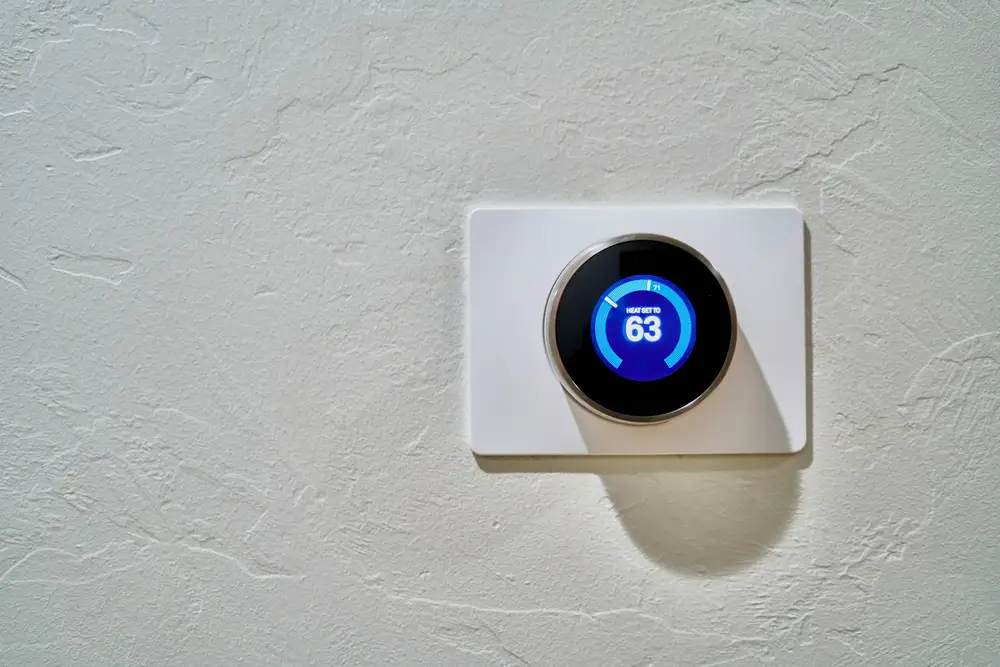
The same overview suggests a programmable thermostat to take advantage of zone heating. Set it to drop when you move into your heated room and to come back up shortly before you leave it.
Which habits make zone heating work?
Five habits turn a heater into a real saving.
- Close the door of the room you heat. With the door closed, every watt goes into one room instead of the hallway.
- Stop the leaks. The Department of Energy says up to 25 percent of a home’s heat is lost through small cracks and holes, and suggests weatherstripping doors and windows. A draft snake under the door of your heated room keeps the warmth where you are.
- Let the sun in by day, shut the curtains at night. The Department of Energy recommends opening curtains during the day to heat the home naturally and closing them at night to keep heat in.
- Use the heater’s thermostat and timer. The heater switches off once the room is warm, so you only pay for the heat you use.
- Match the heater to the room. My space heater electricity guide covers the hourly cost of each wattage, and oil-filled radiator vs ceramic heater compares the two common types.
If the heated room feels a little dry, the space heaters and dry air guide has easy fixes.
How do you use a space heater safely in a zone plan?
With a few simple habits. The CPSC’s winter safety release asks you to keep portable heaters at least three feet from drapes, furniture and bedding, to plug electric space heaters directly into a wall outlet and never into an extension cord or power strip, and to turn heaters off when sleeping.
That last rule fits zone heating nicely: warm the bedroom before bed with the door closed, switch the heater off, and enjoy the warm room. My placement rules guide shows where to put the heater in each room, and the overnight heater guide covers the night routine. For indoor zone heating, an electric plug-in model is the simple choice, and the Department of Energy also recommends a carbon monoxide detector in every home.
How do you set up zone heating in five minutes?
- Pick the room you use most and close its door.
- Turn the central thermostat down or off for the rest of the house, as far as your climate allows.
- Set the heater’s thermostat to the lowest comfortable temperature and the timer to the hours you need.
- Keep the 3-foot zone clear and plug straight into the wall.
- Keep a small second heater for the desk, the bedside or the cold corner.
- Check your next bill. That is the easiest way to see the saving in your own home.
If you only remember one line: heat the room you are in, let the rest of the house rest, and keep one or two heaters ready for the cold days.
Frequently asked questions
Is it cheaper to heat one room with a space heater than the whole house?
It can be a substantial saving when the whole house does not need to be heated. Turn the central thermostat down or off for the rooms you are not using and let a plug-in heater warm the one you are in. The saving is biggest with electric central heat, in a large home where you live in one or two rooms, and in mild climates where the central system can stay off.
Does closing doors and heating one room really save money?
Yes, when the rest of the house is set cooler at the same time. A closed door keeps the heater's warmth in one room, and the Department of Energy notes that up to 25 percent of a home's heat is lost through small cracks and holes, so sealing drafts around that room helps the plan work even better.
Can I turn off the central heating in winter and use a space heater?
In mild winters, such as in California, Florida or Texas, many homes need little or no central heat, and a heater in the room you use can be enough. Where hard freezes are common, keep the central system set low rather than off, and let the heater add comfort where you sit.
How many degrees can I lower the thermostat when I use a space heater?
As far as your climate lets you. The Department of Energy suggests 68°F when you are awake and says each 1°F you set back over an eight-hour period saves about 1 percent on heating. With a heater in your room, the unused rooms can stay lower for the whole day.
How much does it cost to run a space heater?
At the July 2026 U.S. average of 18.31 cents per kWh, a 1,500W heater costs about 27 cents an hour at full power, a 900W heater about 16 cents and a 500W personal heater about 9 cents. A heater with a thermostat switches off once the room is warm, so a real evening costs less.
Can a space heater be the main heat for the room I use?
Yes, for a room it suits. The Department of Energy describes space heaters as providing supplemental heat to a specific room, and portable heaters as useful when the main system is inadequate or too costly to operate. A heater sized for the room, with a thermostat and timer, keeps that room comfortable.
Should I leave a space heater on all night?
The Consumer Product Safety Commission asks you to turn heaters off when sleeping. A simple routine is to warm the bedroom before bed with the door closed, switch the heater off, and enjoy the warm room.
How many space heaters should I keep at home?
One or two is a practical setup: a room heater for the place where you spend the evening and a small personal heater for the desk, the bedside or a cold corner. That way you can warm exactly the spot you use and leave the rest of the house cooler.