
Short answer
An evaporative cooler only pays off in dry air. A fan moves air over your skin and cools you, not the room. An evaporative cooler can lower the air temperature itself, but only when the air is dry enough to take on moisture, and it costs more to buy, more to run, and takes water and cleaning. If your summer afternoons are dry, it is worth the extra money in a room where a fan is not enough. If they are humid, keep the fan and skip the cooler.
Heads-up: some product links below are affiliate links. If you buy through one, Vitherma may earn a small commission at no cost to you — and I only link to gear I'd point a friend to.
The two boxes sit side by side on the shelf, and the cooler costs several times more than the fan. The label says it will make the room cooler, and the fan's label only says it moves air. That sounds like an easy win for the cooler, and in the right climate it is. In the wrong one, you pay more for a machine that does what the fan does and also makes the room damp. This page is about that one decision: what the extra money buys, where it is wasted, and how to tell which case you are in before you order. If you also have a compressor-based air conditioner in the mix, the air cooler vs portable AC comparison covers that decision.
What is the difference between an evaporative cooler and a fan?
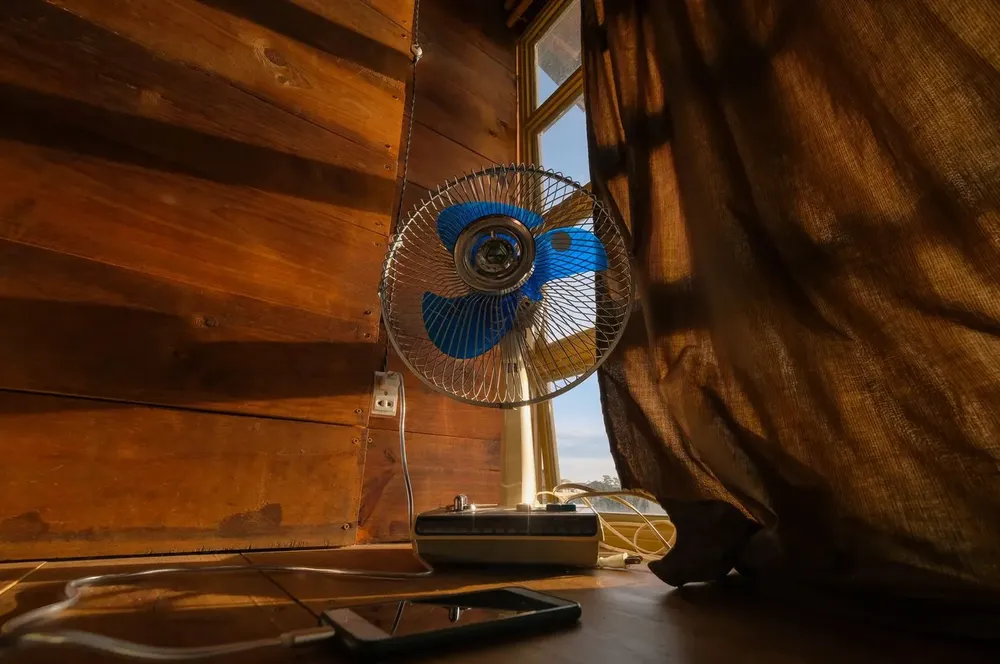
A fan and an evaporative cooler both push air, and the difference is what happens to the air first.
A fan does not change the air temperature. It moves the air that is already in the room. Moving air carries heat and moisture away from your skin faster, so you feel cooler. The U.S. Environmental Protection Agency puts it this way: portable electric fans do not cool air, they move it around and keep you cool by helping your sweat evaporate.
An evaporative cooler cools the air itself. Water sits in a tank, a pump wets a pad, and a fan pulls room air through the wet pad. As the water evaporates it absorbs heat from the air, and the air that comes out is cooler and more humid than the air that went in. The U.S. Department of Energy calls this device an evaporative cooler, also known as a swamp cooler, and in its home cooling guide (PDF) it lists a pro and a con for it. The pro: it costs about half as much to install and uses about a quarter of the energy of a central air conditioner. The con: it requires more frequent maintenance and is only suitable for areas with low humidity.
| Fan | Evaporative cooler | |
|---|---|---|
| What it does | Moves air over your skin | Cools the air with a wet pad, then moves it |
| Lowers the room temperature | No | Yes, in dry air only |
| Works in humid weather | Yes, same as anywhere | Poorly, it mostly adds moisture |
| Water to refill | None | Yes, every day or so |
| Upkeep | Wipe the blades and grille | Clean and drain the tank, replace the pad |
| Running cost | Lowest | A few dollars a month more |
| Price to buy | Lowest | Several times higher |
What does a fan actually do, and where does it fall short?
A fan is the cheapest cooling you can buy, and it works well until the room itself is too hot. Its job is comfort at your skin, not a cooler room, and that shapes how to use it. The Department of Energy makes the same point in its energy-saving tip for fans: they cool people, not rooms, so turn them off when you leave the room. Running a fan in an empty room only adds to the electric bill and to the room's heat, since the motor gives off a little warmth of its own.
The same guide notes that ceiling fans let you raise the thermostat setting about 4 degrees without losing comfort. That is the fan's best use: pair it with the air conditioning you already have, or with a room that is warm but not truly hot. On a mild summer day, in the 70s or low 80s, a fan alone is often all a bedroom or an office needs.
Where a fan falls short is a room that is hot in the air itself. Blowing hot air over your skin helps less as the room gets hotter, and there is a safety limit at the top of that range, covered in the section on heat waves below. That gap, a room hotter than a fan can fix but dry enough for evaporation, is where an evaporative cooler earns its price.
What does an evaporative cooler do that a fan cannot?
It lowers the temperature of the air, not only how the air feels on your skin. In a dry room that difference is real: the air coming out is cooler than the air going in, so the room can settle at a lower temperature than a fan alone would reach. The Department of Energy says that in an arid climate an evaporative cooler can be a cost-effective cooling option, and that in addition to cooling the air it adds moisture, which can improve comfort. Dry air is hard on skin, throat and wood furniture, so a little extra moisture is a bonus in a desert-style climate.
That last point cuts both ways. The moisture that feels good at 15% humidity feels heavy at 60%. The cooler works by pushing water into the air, and the air can only take so much. That is the reason the whole decision comes down to one number, covered next.

Does humidity really decide it?
Yes, and it is the only thing that does. An evaporative cooler needs dry air to work, and the Department of Energy states that it is only suitable for areas with low humidity. Everything else, the price, the tank size, the brand, comes second. If the air is dry on a hot afternoon, the cooler has room to evaporate water and pull heat out of the air. If the air is already humid, there is little room left, so you get a machine that runs, uses water and adds moisture without much drop in temperature.
You do not need a weather station to check. A basic hygrometer, the small humidity gauge sold in hardware stores for around ten dollars, will tell you in under a minute. Put it in the room where you would use the cooler, and read it in the middle of a hot afternoon, not in the morning. I explain how in the humidity measuring section of the cooler vs AC guide. The reading in your actual room is what counts, since a weather app reports the outdoor number and the two can differ.
A useful way to think about it: an evaporative cooler is a bet on your climate. In a dry place the bet pays off every summer for years. In a humid place it never pays off, and no brand or feature changes that. If you are unsure, the cheaper fan is the safe purchase, because a fan works everywhere.
Which one costs more to run?
The evaporative cooler, by a few dollars a month. That surprises people, because the cooler is sold as the efficient option. It is efficient compared with an air conditioner, but it is not efficient compared with a fan: it has a fan of its own and a pump on top of it, so it draws more power than a plain fan does.
Here is the arithmetic, with example wattages you should replace with the numbers on the product pages you are comparing. I use 18 cents per kWh, the figure I use in the heater running-cost guide, taken from the U.S. Energy Information Administration's residential rate table. The formula is watts divided by 1,000, times hours, times the rate.
| Example | Per day (8 hours) | Per month (30 days) |
|---|---|---|
| Fan, 50W | 0.4 kWh, about $0.07 | 12 kWh, about $2.16 |
| Evaporative cooler, 150W | 1.2 kWh, about $0.22 | 36 kWh, about $6.48 |
| Difference | about $0.14 | about $4.32 |
Over a four-month summer that gap is about $17. If the cooler costs $100 more than the fan, the electric bill will never pay that back, because the cooler uses more power, not less. So the honest answer to the question in the title is that the extra cost does not pay off in electricity, only in comfort: you are paying more, all told, for a room that is actually cooler in dry weather. It pays off in electricity only against an air conditioner, which draws far more power than either of these two. The power cost section of the cooler vs AC guide has that comparison.
Where does the extra cost really go?
Four places, and only the first one is on the price tag.
- The purchase price. An evaporative cooler with a pump, a pad and a water tank costs several times what a basic fan does.
- Water. The whole cooling effect comes from evaporating water, so the tank empties, and you refill it. A larger tank means fewer trips, so check the tank size and the run time per tank on the listing.
- Upkeep. The Department of Energy says an evaporative cooler requires more frequent maintenance than other cooling options, and its tip is to regularly clean and drain the unit so it keeps operating efficiently. Standing water and a wet pad are what you are cleaning, and the pad wears out and needs replacing. A fan needs a wipe.
- A damper room. The moisture it adds is a feature in dry air, and a cost when it builds up in a small closed room.
None of these is a reason to avoid an evaporative cooler in a dry climate. They are the reason to be sure about the climate before you buy, because in a humid one you pay all four and get little back.
When does an evaporative cooler pay off?
Three conditions have to line up, and missing any one of them puts you back in fan territory:
- The air is dry. Your hygrometer reads low on a hot afternoon, and your climate is on the dry side for most of the summer, not just for a week.
- A fan is not enough. The room is hot in the air itself, not merely warm, so moving the air over you does not bring relief.
- You can put up with the chores. You are willing to refill the tank, clean it and replace the pad, and the room has a door or window you can open a little to let the extra moisture out.
The places where all three tend to hold are dry-summer homes, garages and workshops with the door open, and porches or patios. In those, an evaporative cooler is a cost-effective way to take the edge off the heat, the way the Department of Energy describes it for an arid climate. It is worth the extra money there.
When should you stay with a fan?
Whenever any of the three conditions above is missing. Concretely:
- Humid summers. The cooler would spend its water and add moisture without much cooling, and a fan does the same job for a fraction of the price.
- Mild heat. If the room is warm but not hot, a fan is enough, and a ceiling fan lets you set the thermostat about 4 degrees higher.
- A small closed bedroom. A cooler adds moisture into a room with nowhere for it to go, and the humidity can build up overnight.
- You do not want chores. If a daily refill and a regular cleaning will not happen, a plain fan is the better long-term fit.
- You need cool air on a person. A fan pointed at you or at a desk is the most direct way to feel cooler for the least money.
What about the small personal air coolers for a desk?
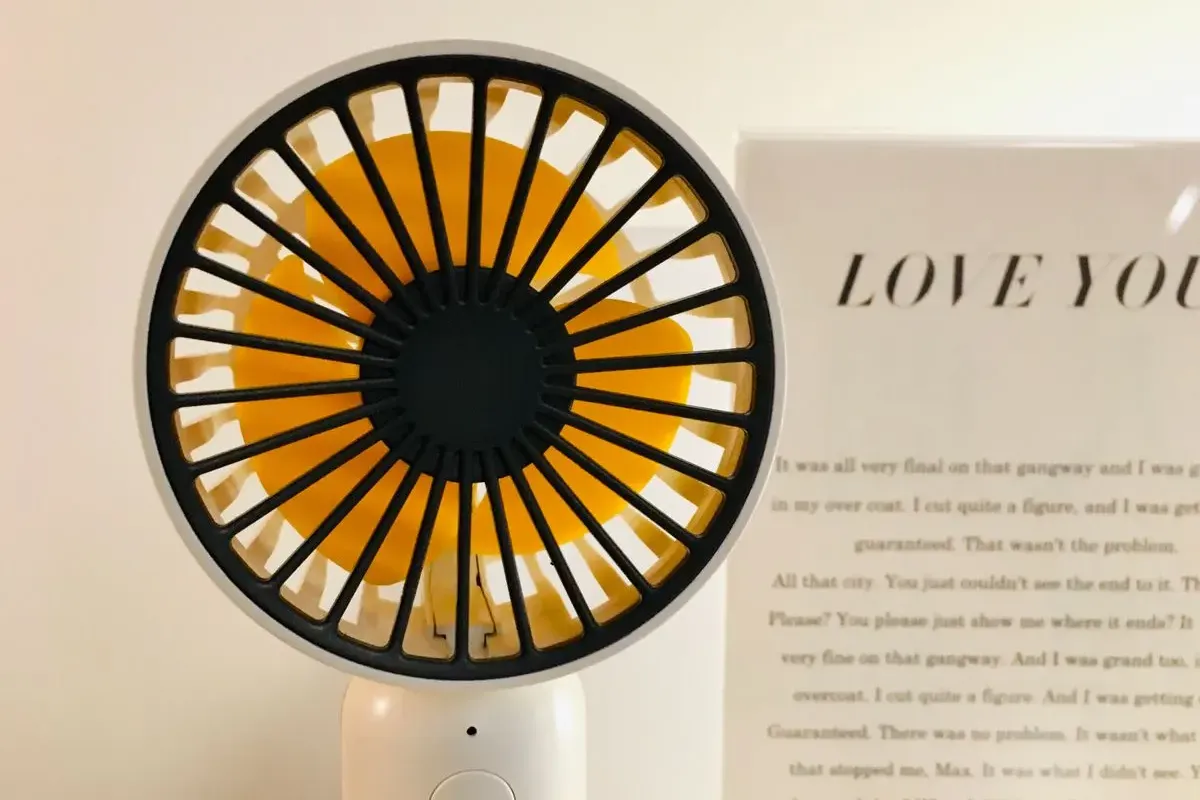
They are the cheap end of the evaporative category, and they set an expectation the physics cannot meet. A small water tray and a wet filter behind a small fan cool a small amount of air. In a dry climate and at arm's length, the breeze on your face can feel cooler than a dry fan's. That is a small, personal effect, not a cooler room. In a humid room they behave like a plain fan with a water tank to refill, so the honest way to buy one is as a desk fan with a water tank, not as a room cooler. If the extra cost is small and the air is dry, it is a harmless gadget. If the price is close to a good regular fan, buy the fan.
The one I link on this page is the FrostCooler. It is sold as a "portable AC", but it has no compressor and no vent hose, so it belongs in this category. I have not tested it, so everything below comes from the maker's product page: a 330 ml water tank, a 4000 mAh battery with 2 to 6.5 hours of runtime, a 6.5W draw and a body of 131 x 105 x 192 mm. That is a personal cooler for a desk or a bedside table, and it belongs in the dry-air, arm's-length case described above.
Are fans and evaporative coolers safe in a heat wave?
Both have limits, and they matter more than the choice between the two. The Centers for Disease Control and Prevention says to use fans only if indoor temperatures are less than 90°F, because in temperatures above 90°F a fan can increase body temperature. The EPA gives a similar warning for the top of the range: do not use electric fans for cooling when the room temperature is in the mid-90s or higher.
When the temperature is dangerously high, the CDC points to air conditioning or a cooling center, which you can find by dialing 2-1-1 or contacting your local health department. Treat a fan and an evaporative cooler as comfort tools for ordinary hot days, especially for older adults, young children and anyone with a heart or lung condition, for whom a very hot room is a health risk, not an inconvenience.
Two practical safety points for an evaporative cooler: it is an electrical appliance sitting next to a tank of water, so keep the cord and plug dry and follow the manual, and unplug it before you refill the tank. If the unit will not run for a week or two, empty and dry it so the water does not stagnate.
How do you choose in 60 seconds?
Answer three questions:
- What does a hygrometer read in the room at 3 pm on a hot day? Low: an evaporative cooler is an option. High: buy a fan.
- Is the room hot, or only warm? Only warm: a fan is enough, and a ceiling fan is the best version. Hot in the air itself and dry: a cooler can do what a fan cannot.
- Will you do the upkeep? Yes: the cooler is a fair buy. No: the fan.
If you can only answer yes to the first one halfway, start with a fan. It costs little, works in any climate, and tells you fast whether moving the air is enough for that room. You can always add a cooler later, and the fan stays useful either way. And if the same room is a bedroom that needs a heater in winter, the cooling section of the pillar guide shows how the two seasons fit together, and the overnight safety guide is worth reading before December.
Frequently asked questions
Is an evaporative cooler better than a fan?
Only in dry air. A fan moves air across your skin and does not lower the room temperature. An evaporative cooler pulls air through a wet pad and can lower the air temperature, but the U.S. Department of Energy says it is only suitable for areas with low humidity. In humid weather a plain fan is the better buy, because the cooler stops cooling and just adds moisture.
Does an evaporative cooler work in humid weather?
Not well. The cooling comes from water evaporating, and air that already holds a lot of moisture takes up very little more. The Department of Energy lists low humidity as the condition for an evaporative cooler. Check a $10 hygrometer on a hot afternoon before you buy, and if the reading is high, choose a fan or an air conditioner instead.
Does an evaporative cooler use more electricity than a fan?
Usually yes, because it has a pump and often a larger fan on top of the same airflow job. Read the wattage on each product page. With example figures of 50W for a fan and 150W for a cooler, at 18 cents per kWh for 8 hours a day, that is roughly $2 against $6.50 a month. Either one is far cheaper to run than an air conditioner.
Can I use a fan and an evaporative cooler together?
Yes, a fan can help spread the cooled air across a room, and the cooler already has a fan built in. What matters more is ventilation: an evaporative cooler adds water vapor to the room, so in a small closed room keep a window or door open a little and watch the humidity reading.
Is it safe to run an evaporative cooler in a bedroom overnight?
It can be, if the room stays dry enough and you follow the manual. Two things to check: how many hours one tank lasts, and whether the humidity in the room keeps climbing through the night. If the hygrometer rises steadily, open a window slightly or switch to a plain fan. Keep the cord and plug away from the water and unplug the unit before refilling it.
Should I use a fan when the room is above 90°F?
The CDC says to use fans only if indoor temperatures are below 90°F, because above that a fan can raise body temperature. The EPA gives the same warning for the mid-90s and higher. On a very hot day, air conditioning or a cooling center is the safe choice. Neither a fan nor an evaporative cooler replaces it.
Are the small personal air coolers for a desk worth buying?
They are mostly a small fan with a water tray, so they help only in the air right in front of you, and only in dry weather. If you sit at a desk in a dry climate and want a cool breeze on your face, one can be pleasant. In a humid room a regular fan does the same job for less money and with no water to refill.