
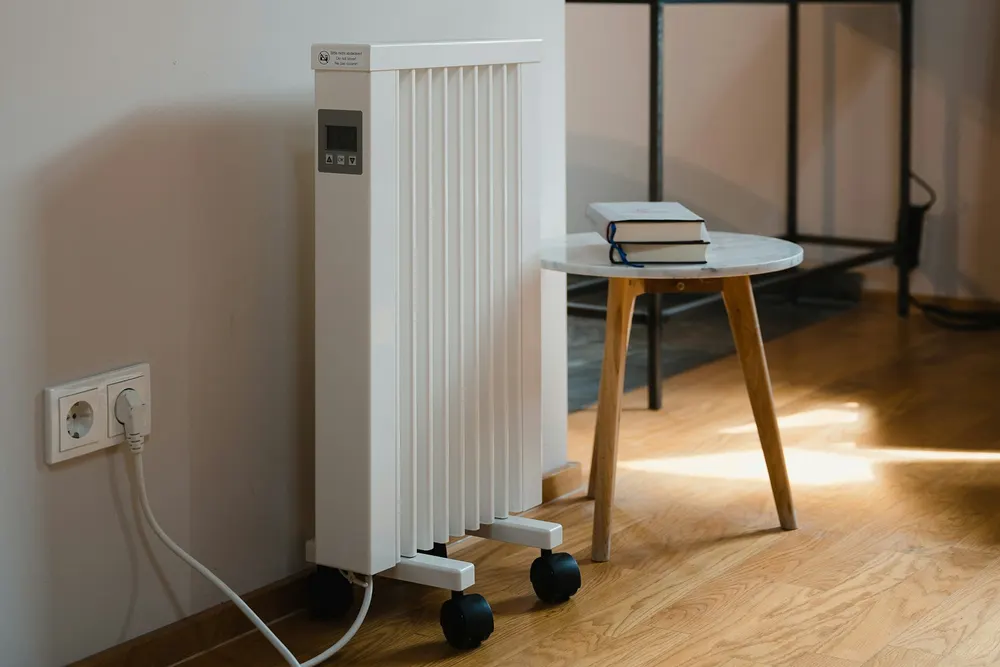
Short answer
At the same wattage, an oil-filled radiator and a ceramic heater cost the same per hour: a 1,500W unit draws 1.5 kWh for every hour its element is on, about 27 cents at the July 2026 U.S. average of 18.31 cents per kWh. What changes your bill is how many hours the element is actually on. An oil-filled radiator warms slowly and keeps giving off warmth after the element switches off, so in a closed room it can run fewer minutes, while a ceramic fan heater warms a small room fastest. Pick the type that fits your room and routine, then let the thermostat and timer do the saving.
This article may contain affiliate links, always to the official websites of the products mentioned. If you buy through one of these links, you support my work at no additional cost to you. This never influences what I write.
It is the question I hear most once the nights get cold: should I buy the quiet oil-filled radiator or the quick ceramic heater, and which one will hurt the electricity bill less? Most answers online either say “oil-filled is cheaper” or “they are identical” and leave it there. Both statements are partly right, and the useful part is in the gap between them.
This page gives you the arithmetic, the one thing that really differs between the two types, and a short way to decide for your own room. The electricity price comes from the U.S. Energy Information Administration, the heater types from the Consumer Product Safety Commission’s staff report on portable electric heaters, and the heating advice from the Department of Energy. Where a number is my own calculation or illustration, I say so.
Does an oil-filled radiator or a ceramic heater cost less per hour?
Neither. At the same wattage they cost exactly the same per hour of the element running. Both are electric resistance heaters, and the Department of Energy’s home heating overview (PDF) describes electric resistance heating as any process in which electricity is converted into heat. A ceramic element does that, and so does the heating element sitting inside an oil-filled radiator. There is no hidden efficiency advantage on either side, because every watt they draw ends up as heat in your room.
So the cost per hour comes from one formula, which I also use in my space heater electricity guide: kilowatts times hours times your price per kilowatt-hour. The EIA puts the U.S. average residential price at 18.31 cents per kWh for July 2026, up from 17.45 cents a year earlier. That is the rate in the table below. Your own bill may be lower or higher: the same EIA table shows North Dakota at 13.41 cents and Hawaii at 48.00 cents.
| Heater power | Per hour | 8-hour night | 30 nights |
|---|---|---|---|
| 1,500W (high) | $0.27 | $2.20 | $65.92 |
| 900W (medium) | $0.16 | $1.32 | $39.55 |
| 500W (personal size) | $0.09 | $0.73 | $21.97 |
These are my calculations at 18.31 cents per kWh, with the element running flat out for the whole period. They apply to an oil-filled radiator and a ceramic heater alike. A real heater with a working thermostat costs less than the full-power figures, because the element switches off when the room reaches the temperature you set.
Why does an oil-filled radiator seem cheaper to run?
Because of what happens after the element switches off. The CPSC staff report on portable electric heaters (PDF, February 2023) separates heaters into two groups. Radiant heaters glow and warm objects and people directly. Convection heaters warm the air and circulate it, either with a fan, as in ceramic fan heaters, or by natural convection, as in oil-filled ones.
Here is my own explanation of what follows from that design, not a lab result. An oil-filled radiator has a lot of metal and oil to warm up. Once that mass is hot, it keeps releasing warmth into the room for a while after the thermostat cuts the power. A ceramic fan heater has almost no mass, so the room starts cooling soon after it stops. At the same thermostat setting, the oil-filled unit’s element can therefore spend a smaller share of each hour switched on.
That is the whole story behind “oil-filled is cheaper”. It is not better efficiency. It is a possible difference in how long the element runs, and how big it is depends on the room, the insulation, the thermostat and how long you stay.
What a difference in run time is worth
To see how large the effect could be, here is an illustration for a 1,500W heater over an 8-hour night at 18.31 cents per kWh. The percentages are examples I picked for the arithmetic, not measurements of any heater.
| Share of the night the element is on | Energy used | Cost for the night |
|---|---|---|
| 100% (never reaches the set temperature) | 12.0 kWh | $2.20 |
| 70% | 8.4 kWh | $1.54 |
| 50% | 6.0 kWh | $1.10 |
| 30% | 3.6 kWh | $0.66 |
Now imagine the oil-filled unit’s element runs 60% of the night and the ceramic heater’s runs 70%. That is 7.2 kWh against 8.4 kWh, or $1.32 against $1.54: about 22 cents a night, or $6.59 over 30 nights. It is a real difference, and it is small next to the next section, where one setting change moves the bill by far more.
I have not measured either type side by side in the same room, so I will not give you a percentage saving. If you see one quoted without a room size, an insulation level and a thermostat setting, treat it as a guess.
Which type warms a room faster?
The ceramic heater, by a clear margin. Its element is small and a fan pushes the warm air straight into the room, so you feel a difference within minutes. The CPSC report lists the element types found in fan-forced heaters as nichrome wire, sheathed elements, or ceramic elements with positive temperature coefficient (PTC) behavior, which means the element’s resistance rises as it heats up.
An oil-filled radiator has to warm its oil and its fins first, then release that heat by natural convection with no fan. That makes it slower to start. In practice you switch it on earlier, a half hour or more before you need the room warm, and then it holds the temperature quietly.
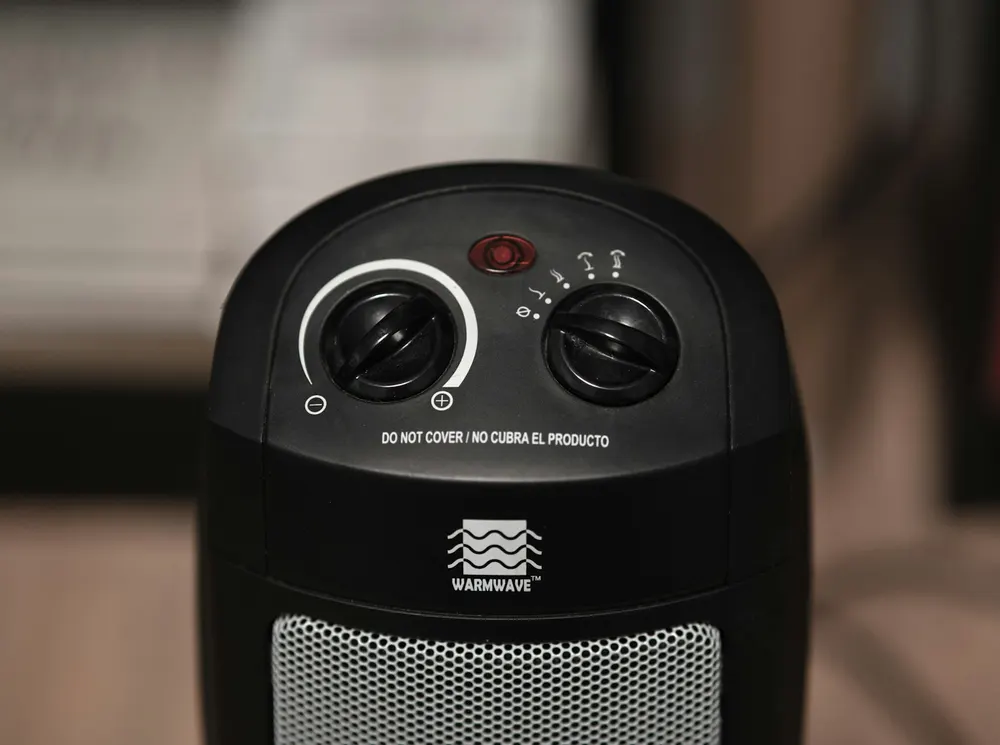
I used the Heatoor, a plug-in PTC ceramic room heater, in a closed room of about 12 m² (roughly 129 sq ft). With the door closed, the air felt warmer within a few minutes. That is one small room, not a lab test, but it matches what the ceramic design is built to do. The details are in my Heatoor review.
Which is quieter, and which is easier to live with overnight?
The oil-filled radiator, because it has no fan. The only sound is usually a faint click when the thermostat switches the element on or off. A ceramic heater has a fan, so it hums softly, which most people stop noticing in a living room and some notice in a bedroom. My quiet bedroom heater guide goes through the noise question in detail.
The safety rules do not change with the type. The CPSC’s winter safety release asks you to keep portable heaters at least three feet from drapes, furniture and bedding, to plug electric space heaters directly into a wall outlet and never into an extension cord or power strip, and to turn heaters off when sleeping. The same release counts about 1,600 fires a year associated with portable heaters, with an average of 70 deaths and 150 injuries a year from 2020 to 2022.
That is why the cheapest routine for a bedroom is also the safest one: warm the room before bed with the door closed, then switch the heater off. With an oil-filled radiator the room stays pleasant for a while after you do. With a ceramic heater a thermostat and a timer give you the same pre-warm routine. My overnight heater guide covers the question of leaving one on in full.
Where does a radiant heater fit in?
It is the third type, and it works differently. A radiant heater, the kind with a glowing element, warms the person and objects in front of it instead of the air. The CPSC report notes that the heat is instant, requiring little time to feel the warmth. That makes it a good fit for a desk or a drafty corner, and less suited to bringing a whole closed room up to temperature, which is where oil-filled and ceramic heaters do their best work.
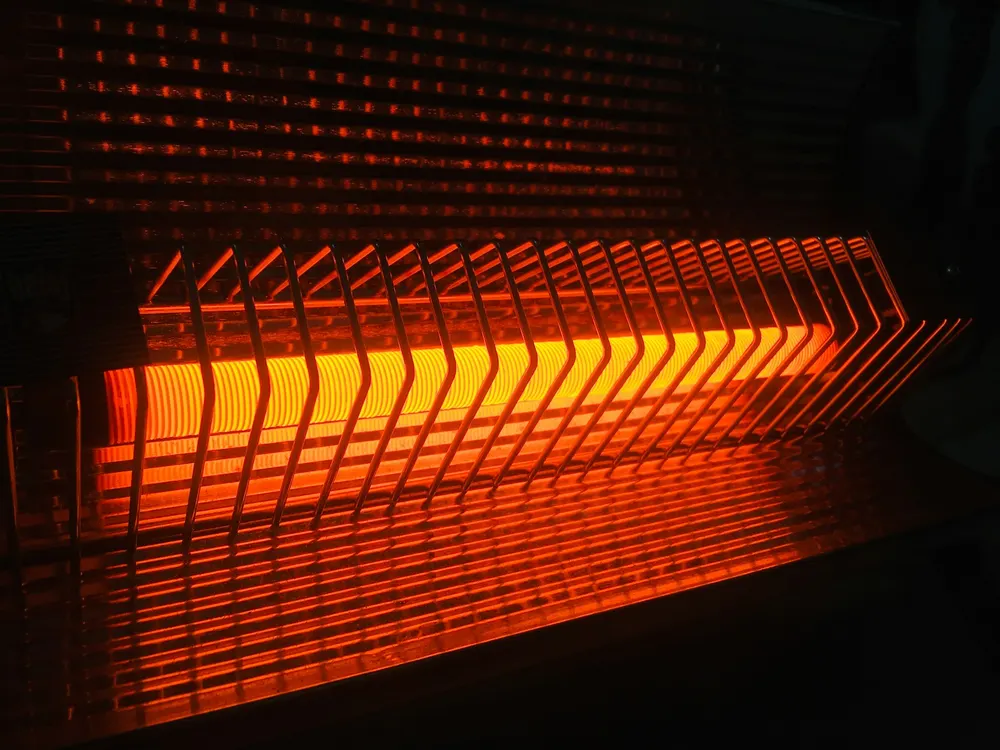
The cost per hour is the same for this type too, since it follows the wattage. My ceramic vs infrared guide compares them, and the types section of the pillar guide puts all three side by side.
What lowers the bill more than the heater type?
Five habits, and each of them moves the number more than the choice between oil and ceramic.
- Heat the room you are in. The DOE’s overview describes space heaters as providing supplemental heat to a specific room. A heater earns its keep when it lets you keep the rest of the house cooler.
- Lower the central thermostat while you do. The DOE’s guide to home heating and cooling (PDF) says you can save 1% on heating bills for each 1°F you set back over an eight-hour period. A warm room next to a cooler house is the idea behind zone heating.
- Use the thermostat on the heater. A heater without one runs flat out, which is the 100% row in the table above. A heater with one cycles.
- Use a timer. Most bedroom use only needs the hour before bed and, if you like, the hour before waking. A timer removes the “I forgot it was on” cost.
- Close the door and stop the leaks. The DOE’s overview says up to 25 percent of a home’s heat is lost through small cracks and holes. A draft snake under the door keeps your heater from heating the hallway.
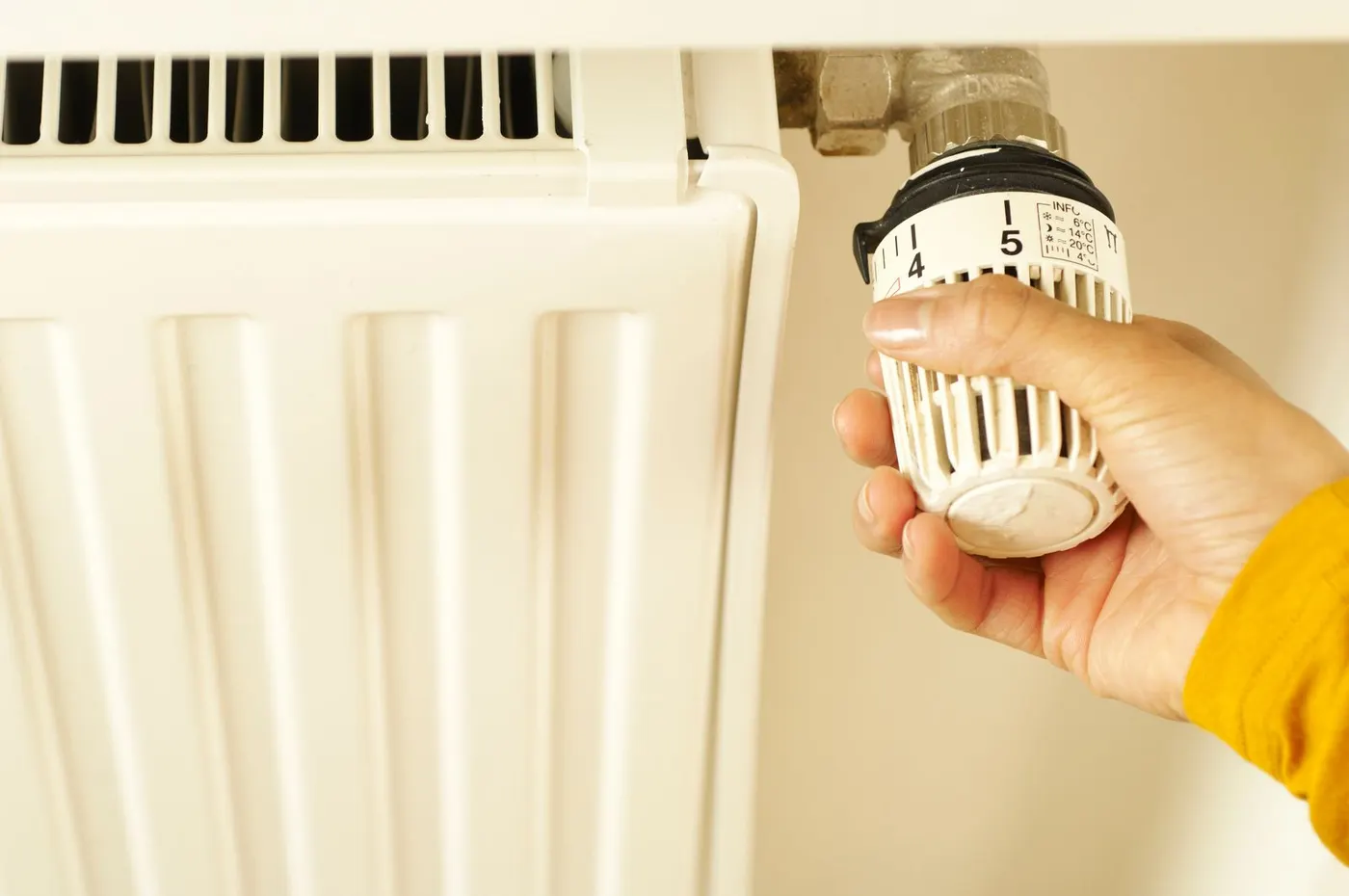
Compare the numbers. Moving from 1,500W to a 900W setting saves $0.11 an hour in the first table. The oil-versus-ceramic difference in my illustration was about 22 cents a night. Choosing the setting and the hours well is worth several times more than choosing the type.
Which type should you pick for which room?
Match the type to how you use the room, since the price per hour is the same. This is my own reading of the points above:
| Situation | What usually fits | Why |
|---|---|---|
| Bedroom, warmed before bed | Oil-filled, or ceramic with a timer | No fan hum with oil; a timer gives ceramic the same routine |
| Home office, used all day | Oil-filled for steady warmth, or a small ceramic at the desk | Slow start matters less when you stay for hours |
| A cold room you enter for an hour | Ceramic | Warms the room in minutes, so you are not waiting |
| Rent or move often | Ceramic | Light, and nothing to heat up before it works |
| Bathroom or any wet room | Neither, unless the manual says it is made for it | Keep electric heaters away from water |
My small-room heater guide has the sizing table behind this, and the winter-ready home checklist shows how it fits the rest of the house.
Which plug-in ceramic heaters are worth a look?
If a ceramic heater is the better fit for your room, two reviewed on this site cover the two common jobs: a room heater and a personal one. Neither comes with a promise on the bill, because no heater has one. What they offer is the control that decides it: a thermostat, a timer and a safety shut-off.
A room heater for a closed room
The Heatoor uses a PTC ceramic element and plugs into a normal wall outlet. You set a temperature on the touch panel or the remote, and it includes a timer, overheat protection and an automatic shut-off, plus a fan-only mode for summer. The maker states coverage of up to 538 sq ft in a closed, well-insulated room. The offer page does not list a wattage, so the easiest way to price it is a plug-in wattmeter (usually $12 to $20), which shows the real draw in seconds. You can also ask the maker’s support. The Heatoor review has the full spec table.
A personal heater for one spot
The CosyJet is a 500W plug-in ceramic heater. The maker publishes a full spec sheet: 129.5 x 91 x 144.5 mm, 442 g, a built-in thermostat with a digital display and a timer from 1 to 9 hours. At 500W it draws 0.5 kWh per hour at full power, which is the last row of the first table: about 9 cents an hour at 18.31 cents per kWh, and less once the thermostat starts cycling it. It suits a desk, a nightstand or a cold corner. My CosyJet review has the running-cost table at different electricity rates.
How do you decide in two minutes?
- Find the watts. Look at the label, or plug the heater into a wattmeter. Multiply kilowatts by hours by your cents per kWh.
- Choose by use, not by price per hour. Quiet and steady for a bedroom or a long day points to oil-filled. Fast warmth for a room you enter and leave points to ceramic.
- Set the thermostat to the lowest comfortable temperature, and the timer to the hours you actually need.
- Keep the 3-foot zone clear and plug straight into the wall.
- Lower the central thermostat while the room heater does the work in the room you use.
If you only remember one line: the heater type decides how the warmth feels, and the settings decide what it costs.
Frequently asked questions
Is an oil-filled radiator cheaper to run than a ceramic heater?
Not per hour. At the same wattage both draw the same electricity while their element is on: a 1,500W unit uses 1.5 kWh per hour, about 27 cents at the July 2026 U.S. average of 18.31 cents per kWh reported by the EIA. An oil-filled radiator can cost less over a night if its element switches on for a smaller share of the time, which depends on the room, the insulation and the thermostat setting.
How much does it cost to run a 1,500W heater all night?
About $2.20 for 8 hours at full power, using the July 2026 U.S. average rate of 18.31 cents per kWh. That is 12 kWh. A heater with a working thermostat costs less, because the element cycles off once the room reaches the temperature you set. Over 30 nights at full power the figure is about $65.92.
Which heats a room faster, oil-filled or ceramic?
A ceramic heater. Its small element and fan push warm air into the room within minutes. An oil-filled radiator has to warm its oil and fins first and then releases heat by natural convection without a fan, so it starts more slowly and is best switched on earlier.
Which is better for a bedroom?
Either can work. An oil-filled radiator has no fan, so it is the quieter choice, and it can keep releasing warmth for a while after the element switches off. A ceramic heater with a thermostat and a timer gives you the same warm-the-room-before-bed routine. Whichever you use, the CPSC says to keep heaters 3 feet from bedding and to turn them off when sleeping.
Do oil-filled radiators use less electricity once the room is warm?
They can run their element for a smaller share of the time, because the oil and metal keep releasing heat after the power cuts off. The effect depends on the room and the thermostat, and I have not measured it side by side, so treat any exact percentage you see online with caution. The wattage and the number of hours the heater is on matter more than the type.
Can I leave an oil-filled or ceramic heater on while I sleep?
The CPSC advises turning heaters off when sleeping, keeping them at least 3 feet from bedding and drapes, and plugging them straight into a wall outlet, never into an extension cord or power strip. A common routine is to warm the room before bed with the door closed and switch the heater off when you lie down.
How do I find out what my own heater really costs?
Read the wattage on the label, or plug the heater into a wattmeter, which shows the real draw. Then multiply kilowatts by hours by your price per kWh from your electricity bill. For example, 1.5 kW for 4 hours at 18.31 cents per kWh is 6 kWh, or about $1.10.
Is a space heater cheaper than heating the whole house?
It can be, when it lets you keep the rest of the house cooler. The Department of Energy describes space heaters as supplemental heat for a specific room, and says you can save 1% on heating bills for each 1°F you set the thermostat back over an eight-hour period. Running a heater while the central heating stays at the same temperature adds cost without the saving.