
Short answer
Dogs bark at night because they hear something you cannot, feel lonely, restless or stressed, want attention, or need something like the bathroom. Find the trigger first, then use calm routines: exercise before bed, a blocked window view, a bed near you and rewards for quiet. A handheld trainer such as WoofAway can interrupt a bark while you are awake and on hand.
This article may contain affiliate links, always to the official websites of the products mentioned. If you buy through one of these links, you support my work at no additional cost to you. This never influences what I write.

It is 11 p.m., the house is finally quiet, and your dog starts barking at the window. Or it is 3 a.m., and the barking is coming from the other side of a closed door. Either way, you are awake, the neighbors might be too, and the only thing you want is an answer.
This guide covers the causes the ASPCA and Elanco describe, a quick way to work out which one is yours, what helps at night and where a handheld trainer like WoofAway fits. I research home and pet products; I am not a veterinarian or a certified dog trainer.
Why does my dog bark at night?
Barking at night is the same barking you hear by day, with fewer distractions and a quieter house. The ASPCA sorts barking by what causes it, and several of its types show up after dark. Elanco’s guide to night barking lists the usual suspects: stress or anxiety, attention seeking, loneliness or boredom, a response to noise or a perceived threat, and discomfort.
| Cause | What the sources say | A clue it is yours |
|---|---|---|
| Sounds and movement outside | The ASPCA calls it alarm barking: a dog can bark at sights or sounds in any location. Elanco adds that dogs bark to alert the household to a perceived threat. | The barking starts at the window or the door, often facing the street or yard. |
| Other dogs barking | The ASPCA lists socially facilitated barking: dogs bark when they hear other dogs bark. | It begins right after a neighbor’s dog starts. |
| Attention | Elanco says reacting to the barking, even with treats or play, can teach a dog to bark for attention. The ASPCA describes the same pattern for treats, toys and play. | The barking stops the moment you walk in or speak. |
| Loneliness or stress | Elanco lists stress, anxiety and loneliness, and notes that dogs are companions who want to be close to us. | It happens when the dog is shut in another room, or away from the family. |
| Pent-up energy | Elanco ties barking to boredom and too little activity. For repetitive barking at nothing in particular, the ASPCA suggests more exercise, mental stimulation and social contact. | A quiet day at home, then a dog wide awake at bedtime. |
| A need or discomfort | Elanco says a puppy may need to go outside to relieve itself, and that pain or discomfort can lead to whining or barking. | A new pattern, whining along with the barking, or a puppy at bedtime. |
One more note from the ASPCA is worth keeping: if your dog barks without an obvious trigger, have the dog examined by a veterinarian to rule out medical causes. The clue column is my own shorthand, not something the sources say, so treat it as a place to start.

How do you find out why your dog barks at night?
Watch before you change anything. The ASPCA starts its advice the same way: work out what kind of barking you are dealing with, because the fix depends on the cause. Three nights of notes are usually enough. Here is the short version I use:
- When does it start? Right at bedtime points to energy or a routine. Hours later, to a sound or a need.
- What happens just before? A car door, a cat, a neighbor’s dog, the sound of you leaving the room.
- Where is your dog? At the window, at the bedroom door or in a crate tells you a lot.
- What happens when you react? If the barking stops the second you appear, and starts again when you leave, attention is part of it.
What helps a dog stop barking at night?
Match the fix to the cause. These come from the ASPCA and Elanco, with my own notes where I say so:
- Exercise first. Elanco says walks, play and mental activity help a dog settle at bedtime. A walk and a short game after dinner is a routine that costs very little.
- Block what your dog sees and hears. The ASPCA suggests limiting the view of passersby, such as with a film on a window. Elanco suggests curtains or blinds, and white noise or a fan to cover sounds from outside.
- Keep your dog close. Elanco notes that shutting a dog in another room, a crate or an outdoor kennel can increase barking, because dogs want to be near us. My own tip: move the bed into your bedroom for a week and see whether the barking changes.
- Do not reward demand barking. Elanco calls ignoring attention-seeking barks the most tried-and-true method, with no petting, no soothing voice and no treats. If your dog may need to go out, take the puppy out calmly and straight back to bed.
- Teach “Quiet.” The ASPCA’s method: let your dog bark a few times, then calmly cue “Quiet” and reward the silence.
- Skip punishment. The ASPCA says never to use punishment if your dog barks out of fear or anxiety, which is one more reason to find the cause first.
Try one change per week and keep notes, so you can see which step makes the difference for your dog.
Where does a handheld trainer like WoofAway fit?
It fits the part of the night you are awake for: the bark at the window at 10 p.m., the first bark at a noise, the bedtime barking you can hear from the sofa. WoofAway is a handheld device you point toward your dog and press to emit an ultrasonic tone that people cannot hear. The producer describes it as a non-contact way to interrupt a behavior for a moment, so you can give one clear cue and reward the right response. That is the moment the ASPCA’s “Quiet” cue needs, and the routine above does the rest.
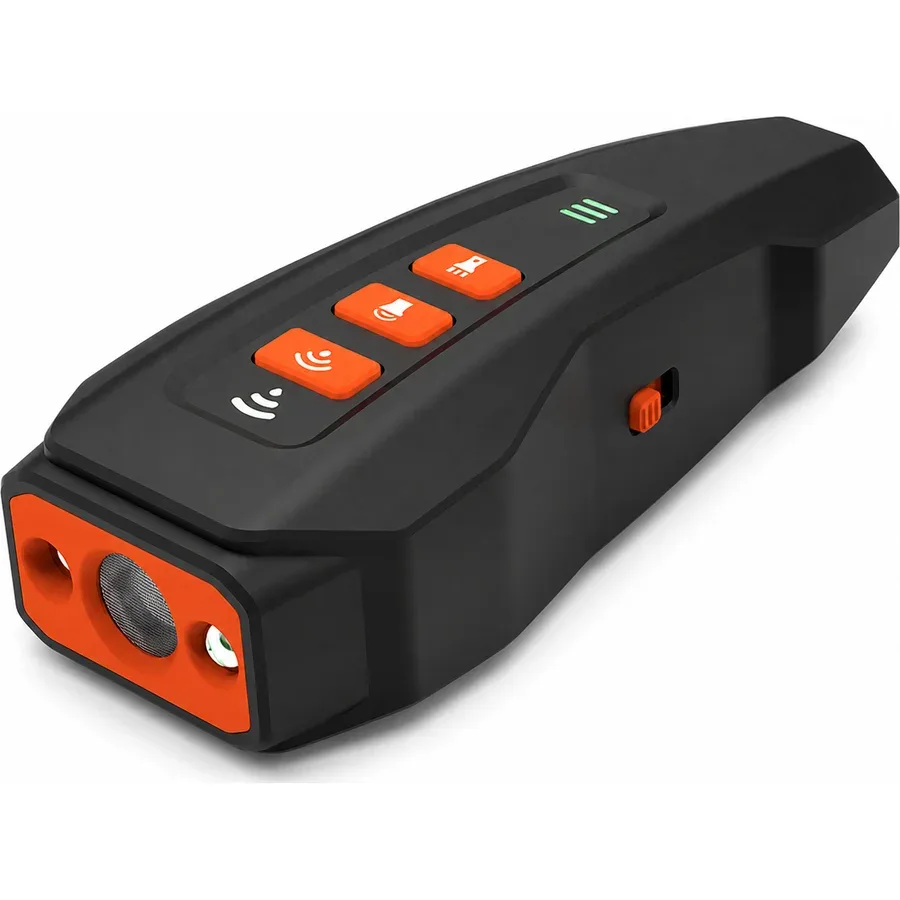
These are the specs the producer publishes: three ultrasonic modes (25 kHz, 10–25 kHz and 10–30 kHz), a working distance of about 1 to 10 meters (3 to 33 feet), a 10-second automatic cutoff on each press, USB-C charging in about 4 to 6 hours and a green light that shows when it is firing. The producer says it does not shock, spray or touch your dog. It is made for dogs with normal hearing, from 6 months to 8 years old and under 50 lb, and it comes with a 30-day money-back guarantee. My WoofAway review goes through all of it.
On the official website one device costs $39.95, two cost $71.91 ($35.96 each), three cost $88.69 ($29.56 each) and four cost $95.88 ($23.97 each). The 3-pack and the 4-pack ship free. Prices are set by the producer and can change.
It is a tool for the moments you are there for, and it does not watch the house while you sleep. If your dog barks while you are out or asleep, my comparison of a handheld trainer and an anti-bark collar explains how the two differ and which one covers which moment.
What does a calm bedtime routine look like?
Here is a routine that combines the steps above. It is my own arrangement of what the sources recommend:
- Walk and play after dinner. Let the energy out before the house goes quiet.
- Last bathroom trip right before bed, especially for a puppy.
- Close the curtains and turn on a fan or white noise to cover the street.
- Put the bed near yours, so your dog is not alone and out of sight.
- If the barking starts, cue “Quiet,” reward the silence and say nothing else. A handheld trainer helps here, because it gives you a calm way to break the bark before you cue.
- Give it a week. Keep notes, and change one thing at a time so you know what worked.
For more on setting up a comfortable spot for your dog, including a bed off the floor and away from drafts, read my guide to keeping dogs and cats warm in winter. For everything else I have researched, browse all Vitherma guides and read how I research and write.
Photos: Wolf Art and Gem Webb on Pexels; product photo by the producer.
Frequently asked questions
Why does my dog bark at night?
The usual causes are sounds or movement outside, other dogs barking, attention seeking, loneliness or stress, pent-up energy, and a need such as going to the bathroom. The ASPCA also says to have a dog examined by a veterinarian to rule out medical causes when the barking has no obvious trigger.
Should I ignore my dog barking at night?
If your dog is barking for attention, Elanco calls ignoring it the most tried-and-true method: no petting, no soothing voice and no treats. If a puppy may need to go outside, or the barking is new and comes with whining, check on the dog calmly first.
Does shutting my dog in another room or a crate help?
Not always. Elanco notes that shutting a dog in another room, a crate or an outdoor kennel can increase barking, because dogs want to be close to us. Moving the bed into your bedroom for a week is an easy test.
How do I stop my dog barking at noises outside at night?
Limit what your dog can see and hear. The ASPCA suggests blocking the view of passersby, and Elanco suggests curtains or blinds plus white noise or a fan to cover sounds from outside.
What is the “Quiet” command?
The ASPCA describes it as letting your dog bark a few times, then calmly saying “Quiet” and rewarding the silence.
Can I use a handheld ultrasonic trainer at night?
Yes, for the moments you are awake and holding it. WoofAway emits an ultrasonic tone you point at your dog, with a range of about 3 to 33 feet and a 10-second automatic cutoff per press. The producer describes it as a support for reward-based training: interrupt the bark, give one clear cue, then reward the right response.
Does WoofAway hurt my dog?
The producer states that WoofAway does not shock, spray or touch your dog. It is designed for dogs with normal hearing, 6 months to 8 years old and under 50 lb.
How much does WoofAway cost?
On the official website one device costs $39.95, two cost $71.91, three cost $88.69 and four cost $95.88. The 3-pack and the 4-pack ship free, and every order carries a 30-day money-back guarantee. Prices are set by the producer and can change.
Is this veterinary or training advice?
This guide summarizes what the ASPCA and Elanco publish about barking, plus the producer’s own statements about WoofAway. I research home and pet products; I am not a veterinarian or a certified dog trainer.